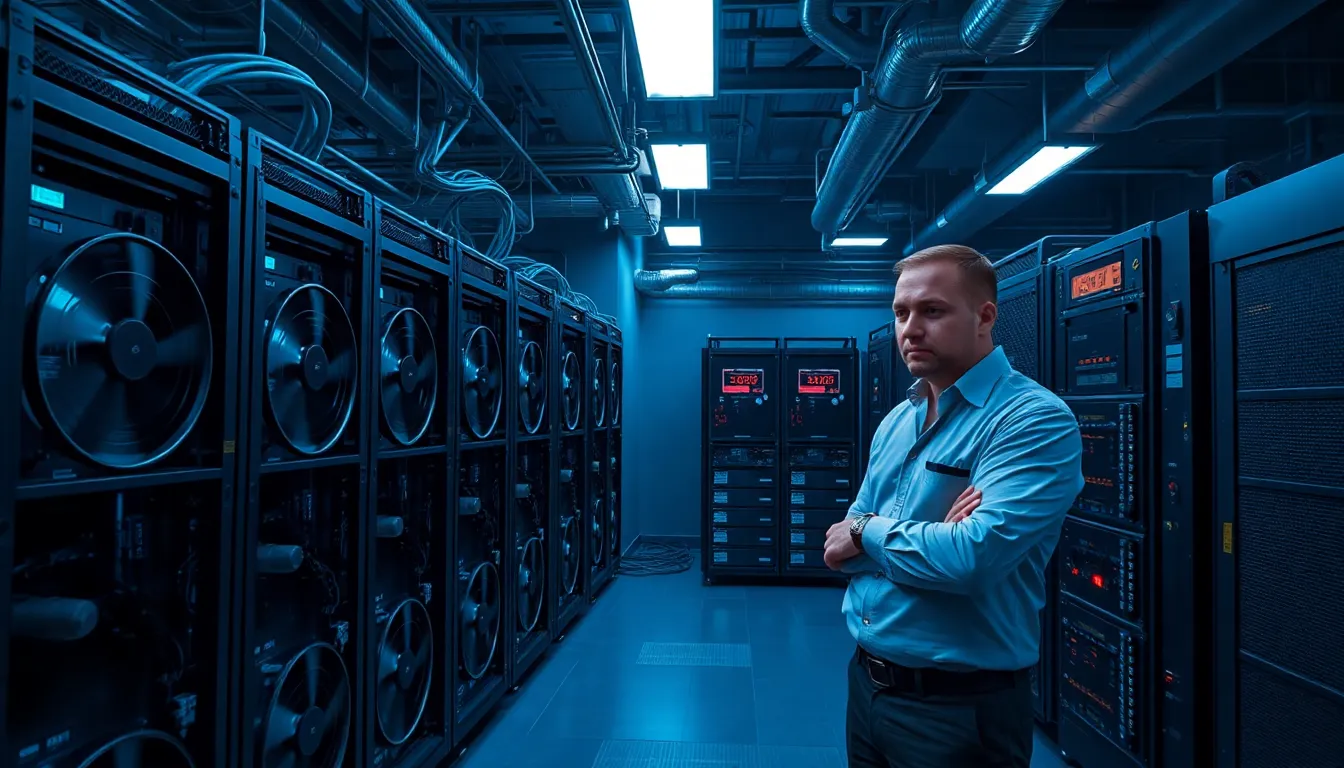
JPMorgan: Bitcoin-Mining kostet 86.000 US-Dollar – Miner unter Druck

AI-generated
24.11.2026 178 times read 8 Comments

JPMorgan: Bitcoin-Mining kostet rund $86,000 – Marktpreis liegt deutlich darunter

Das Mining eines einzelnen Bitcoin kostet nach einer Schätzung von JPMorgan inzwischen etwa $86,000. Gleichzeitig wurde Bitcoin zum Zeitpunkt des Berichts bei ungefähr $65,000 gehandelt, sodass Minern pro produziertem Coin ein Fehlbetrag von rund $21,000 entstand.

Die Einschätzung stammt aus einem am November 18, 2026 veröffentlichten Bericht des Analystenteams von JPMorgan unter Leitung von Nikolaos Panigirtzoglou. Laut dem Bericht ist der durchschnittliche Bitcoin-Produktionspreis im Jahresverlauf kontinuierlich gestiegen: Im Juni 2026 lag die Schätzung noch in einer Spanne von $77,000 bis $78,000, im September bei $85,000.

Get $500 free Bitcoin mining for a free testing phase:

  • Real daily rewards
  • 1 full month of testing
  • No strings attached

If you choose to buy after testing, you can keep your mining rewards and receive up to 20% bonus on top.

ZeitraumGeschätzte Produktionskosten
Juni 2026$77,000 bis $78,000
September 2026$85,000
November 18, 2026etwa $86,000

Während die Produktionskosten stiegen, entwickelte sich der Bitcoin-Preis in die entgegengesetzte Richtung. Zwei Tage nach Veröffentlichung des Berichts fiel Bitcoin unter $60,000. Dadurch weitete sich die Differenz zwischen Produktionskosten und Marktpreis auf mehr als $26,000 aus.

JPMorgan bezeichnet die Produktionskosten als eine „soft floor“ und ausdrücklich nicht als feste Unterstützung für die Preisbewertung. Die Kennzahl kann demnach als Orientierung für die wirtschaftliche Belastung der Miner dienen, garantiert jedoch kein bestimmtes Preisniveau.

„Soft floor“ statt eines strikten Unterstützungsniveaus für die Preisbewertung.

Nach Einschätzung der Analysten könnten insbesondere kostenintensive Miner auf den Druck reagieren, indem sie größere Teile ihrer Bitcoin-Reserven verkaufen, um laufende Betriebskosten zu decken. Andere Unternehmen könnten ihre Energie- und Hardwarekapazitäten in Infrastruktur für künstliche Intelligenz verlagern und damit ein anderes Geschäftsfeld erschließen.

  • Höherkosten-Miner könnten mehr Bitcoin-Reserven verkaufen.
  • Ein Teil der Miner könnte Energie und Hardware für Infrastruktur für künstliche Intelligenz einsetzen.
  • Unprofitable Miner könnten den Betrieb einstellen.

Der Abstand zwischen Produktionskosten und Bitcoin-Preis könnte laut JPMorgan auch dann kleiner werden, wenn sich der Bitcoin-Preis nicht erholt. Wenn unrentable Miner den Betrieb einstellen, sinkt die Hashrate. Das könnte wiederum eine Abwärtsanpassung der Mining-Schwierigkeit auslösen.

Bei einer niedrigeren Schwierigkeit wäre für die verbleibenden Miner weniger Rechenaufwand erforderlich, um einen Bitcoin zu produzieren. Dadurch könnte der durchschnittliche Produktionspreis sinken, während sich das Netzwerk an eine kleinere Zahl aktiver Miner anpasst.

BeobachtungsgrößeMögliche Bedeutung laut JPMorgan
HashrateEin anhaltender Rückgang könnte auf die Aufgabe unrentabler Miner hindeuten.
Mining-SchwierigkeitEine deutliche Abwärtsanpassung würde eine Reaktion auf eine kleinere Miner-Basis anzeigen.
ETF-FlowsEine Umkehr der Abflüsse könnte die Nachfrageseite direkt verbessern.

JPMorgan führt die jüngste Schwäche des Bitcoin-Preises unter anderem auf Abflüsse aus börsen­gehandelten Bitcoin- und Ether-Fonds zurück, die von Privatanlegern getrieben worden seien. Als weiteren Faktor nennt der Bericht veränderte Erwartungen hinsichtlich Zinssenkungen.

Zusätzliche Verkäufe durch Miner könnten den Druck auf einen bereits schwachen Markt erhöhen. Wenn höherkostenintensive Miner zur Finanzierung ihrer Ausgaben Bitcoin-Reserven veräußern, könnte das Angebot steigen, insbesondere wenn keine entsprechende Zunahme der Nachfrage erfolgt.

Für die Beobachtung der weiteren Entwicklung hebt JPMorgan drei Signale hervor: die Hashrate, Anpassungen der Mining-Schwierigkeit und die ETF-Flows. Ein anhaltender Rückgang der Hashrate würde im beschriebenen Modell auf eine Kapitulation unrentabler Miner hindeuten, während eine deutliche Senkung der Schwierigkeit eine Anpassung des Netzwerks an eine kleinere Miner-Basis anzeigen könnte.

Zusammenfassung: Nach Angaben von TradingView liegen die von JPMorgan geschätzten Bitcoin-Produktionskosten bei etwa $86,000, während Bitcoin zunächst nahe $65,000 und zwei Tage später unter $60,000 gehandelt wurde. Als zentrale Beobachtungspunkte nennt JPMorgan Hashrate, Mining-Schwierigkeit und ETF-Flows.

Sources:

Note on the use of artificial intelligence on this website

Your opinion on this article

Please enter a valid email address.
Please enter a comment.
The “soft floor” point is important here—mining costs don’t magically stop Bitcoin from falling. If expensive miners start selling reserves or switching to AI infrastructure, that could add even more pressure in the short term, while the difficulty adjustment may only help the survivors later on. I’ll be watching the hashrate and ETF flows more closely than the $86K estimate itself.
The earlier point about mining costs not acting as a guaranteed floor is exactly right, and I think the reserve-selling angle deserves even more attention. A miner can be profitable on paper over the long term and still face a serious cash-flow problem today if electricity, debt payments, staff and equipment bills are due every month. That is where the $86,000 estimate becomes relevant, not as some magical support level, but as a warning that the current economics may be forcing difficult decisions.

At the same time, I would be careful with treating a falling hashrate as a simple bearish signal. In the short term it could show capitulation and additional selling, but it would also mean less competition for the miners that remain. The difficulty adjustment does not happen instantly, so there can be a painful period before the network reaches a new balance. After that, the strongest operators may actually be in a better position, especially if they have cheap power and relatively modern hardware.

The possible move into AI infrastructure is interesting too, although I doubt every mining site can simply switch overnight. Energy access and data-center capacity are valuable, but mining facilities may need major upgrades for cooling, networking and specialized chips. Still, the fact that companies are even considering a different use for their infrastructure says a lot about how tight the margins have become.

For me, ETF flows are probably the most important part of the picture because they reflect demand outside the mining industry. If those flows remain negative, miner selling could have an outsized impact. On the other hand, a return of steady inflows might absorb a fair amount of the extra supply without anyone noticing where it came from. I’d also watch whether miners are selling newly mined coins or older treasury holdings, since those tell slightly different stories about their financial health.

The main lesson is that production cost estimates are useful context but not a price prediction. Markets can stay below an industry’s average cost for longer than expected, and averages can hide huge differences between individual operators. A large, efficient miner with cheap electricity may survive at prices that would shut down a smaller competitor. So I’m with the article on watching hashrate, difficulty and ETF flows together rather than focusing on one headline number. That combination should give a much clearer picture of whether this is a temporary squeeze or a broader miner capitulation.
I agree the soft floor thing is more of a warning sign then a real price floor, but I still dont fully get how they calculate this $86k number. Is it just electricity and machines or also staff, buildings, loans and all the other random costs? Becaus every miner surely has completly differnt energy prices, so one giant average can maybe be kinda misleading.

The part about miners moving into AI is intresting too, although I feel like everybody says AI now when a company wants to sound future proof lol. Mining computers arent automatically perfect AI computers, are they? Maybe some power sites can switch over, but the chips and setup is probably not the same thing. It sounds less like an easy escape and more like a very expensive rebuild.

Also if big miners sell coins, that can push price down, but if small miners shut off then difficulty adjusts later, so the whole system is sort of eating itself and then fixing itself? I might be understanding that wrong. Difficulty does not instantly save anyone anyway, and debts still have to be paid while waiting for the adjustment. Hashrate dropping could be capitulation, or maybe just seasonal power prices and temporary machines going offline, so I wouldnt read every dip as a disaster.

The ETF flows seem maybe even more important because miners selling is supply, but ETF outflows show demand is leaving too. When both happen at the same time it gets ugly fast. And interest rate expectations can affect literally everything these days, which is a bit annoying because apparently Bitcoin is decentralized until the central banks say something.

I would watch whether the $86k estimate keeps rising while the market stays under it, but also compare public miners balance sheets and actual power contracts instead of taking one JPMorgan average as gospel. A miner with cheap hydro power could be fine at prices where another one is completly doomed. Anyway the headline makes it sound like Bitcoin has a fixed production price, but its more like a changing stress-o-meter for the industry, not a magical support level.
Yeah this is why the 86k number feels more like a warning light then a real price floor. If miners switch over to AI thats probably not instant though, theres contracts and elecricity stuff involved, but the hash rate falling could make the whole estimate change pretty fast anyway.
Yeah the soft floor isnt really a floor at all, more like a very expensive warning sign lol. If miners switch to AI stuff that sounds simple but moving all that hardware and power cant happen overnite, so I think hashrate could stay messy for a while before the difficulty catches up.
Yeah the 86k number feels kinda made up precise, but if miners are loosing coins just to keep rigs running thats obviusly not good for price or the network lol
Fair point about watching the hashrate and ETF flows, but I’d also keep an eye on how much debt these miners carry. A company can survive temporarily below its estimated production cost by selling reserves or refinancing, so the shutdowns might come later than the headline number suggests. The $86K figure is useful context, just not a reliable price floor.
I agree with the earlier point that the $86K figure should not be treated as a magical price support, but I think the situation is even more complicated than simply watching miners sell reserves or move into AI. The estimated production cost is an average, and averages can hide huge differences between companies. A miner with very cheap electricity and newer machines may still be comfortable below $60K, while another operator with expensive power contracts could already be losing money badly.

What interests me most is the timing of the possible adjustment. Difficulty does not respond instantly to every price move, so miners can remain under pressure for quite a while before the network really becomes easier to operate. In the meantime, highly leveraged companies may have to sell bitcoin, raise capital, or shut down equipment. That could create a nasty feedback loop: falling prices lead to reserve sales, reserve sales add supply, and the extra supply keeps prices under pressure.

At the same time, a lower hashrate is not automatically a disaster for Bitcoin. It would certainly show that parts of the mining industry are in trouble, but the protocol is designed to adapt. Once inefficient operations leave, the remaining miners may become healthier and more profitable. The more important question is probably whether the decline is orderly or whether several large publicly traded miners run into liquidity problems at the same time.

The AI-infrastructure angle also deserves more attention. It sounds attractive because miners already have power connections, land, cooling systems and technical staff, but mining facilities cannot always be converted into AI data centers overnight. AI workloads often require very different hardware and network infrastructure. So for some companies this may be a realistic second business, while for others it could just be a buzzword used to reassure shareholders.

I also agree that ETF flows could matter more for the short-term price than mining economics. If investors continue pulling money from spot funds, even a reduction in miner selling may not be enough to stabilise the market. On the other hand, a return of institutional demand could absorb miner sales surprisingly quickly. That is why I would look at all three indicators together: hashrate, difficulty and ETF flows, instead of drawing conclusions from the production-cost estimate alone.

The $86K number is useful as a stress indicator, not as a floor. It tells us that a large part of the mining sector may be operating with very little margin, but it does not tell us exactly where Bitcoin has to trade. Mining has survived difficult periods before, although the weaker players usually pay the price first. The next few difficulty adjustments should reveal whether this is just a temporary squeeze or the start of a much bigger shakeout.

Article Summary

JPMorgan estimates Bitcoin’s mining cost at about $86,000, far above its market price, potentially pressuring miners to sell reserves or shut down.

...
$500 FREE BTC Mining

Get $500 free Bitcoin mining for a free testing phase:

  • Real daily rewards
  • 1 full month of testing
  • No strings attached

If you choose to buy after testing, you can keep your mining rewards and receive up to 20% bonus on top.

Counter