Table of Contents:
Cloud Mining Platforms in 2025: Performance Benchmarks, Yields, and Platform Comparisons
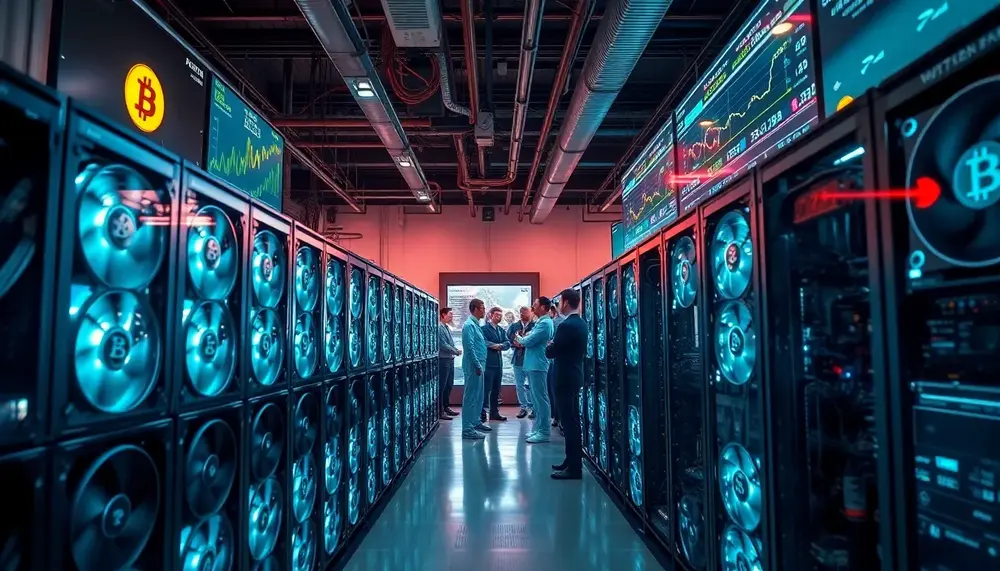
The cloud mining landscape has matured significantly entering 2025, driven by post-halving Bitcoin economics, more transparent contract structures, and the entry of institutional-grade infrastructure providers into the retail market. Average advertised yields now range from 3% to 12% monthly ROI depending on the coin mined, contract duration, and the platform's actual hashrate efficiency. However, these headline numbers require serious scrutiny — the spread between marketing claims and real-world payouts can exceed 40% on lower-tier platforms, particularly when electricity cost adjustments and maintenance fees are factored in.
Bitcoin remains the dominant target for cloud mining contracts, but platforms offering diversified mining across assets like Dogecoin alongside Bitcoin have gained traction in 2025, primarily because merged mining of DOGE with LTC allows operators to extract additional yield from the same computational work. This architecture meaningfully improves the economics for end users without proportionally increasing their contract cost.
Get $500 free Bitcoin mining for a free testing phase:
- Real daily rewards
- 1 full month of testing
- No strings attached
If you choose to buy after testing, you can keep your mining rewards and receive up to 20% bonus on top.
What Performance Benchmarks Actually Matter
When comparing platforms, raw TH/s pricing is the first number to audit. In Q1 2025, competitive pricing for SHA-256 Bitcoin mining sits between $8 and $18 per TH/s for annual contracts — anything significantly above this range demands justification through stronger SLAs, better uptime guarantees, or demonstrable track records. Uptime is the sleeper metric: a platform delivering 95% uptime versus 99% uptime on a 100 TH/s contract effectively costs you 4 TH/s worth of revenue over a year, a gap that compounds across longer contract terms.
Payout frequency and withdrawal minimums are operationally critical. Daily automatic payouts with low thresholds (under 0.0001 BTC) distinguish professional operations from platforms using float management strategies. Investors comparing their options should review which Bitcoin cloud mining platforms have built verified reputations for consistent, secure payouts rather than relying solely on advertised yield percentages.
Yield Expectations and the Halving Effect
The April 2024 halving has reset baseline profitability assumptions across the industry. Platforms that had locked in long-term hosting contracts at pre-halving energy rates now carry structural advantages — they can deliver competitive yields even when BTC spot prices consolidate. For retail investors entering new contracts in 2025, the practical yield window on Bitcoin mining contracts with reputable providers is realistically 6% to 9% annually after fees, assuming BTC prices remain in the $80,000–$120,000 range. Altcoin-oriented contracts can outperform this, though with higher variance.
For investors who want exposure without hardware complexity, the leading crypto cloud mining services in 2025 have largely eliminated the technical onboarding friction that plagued earlier generations of the industry. Reputable platforms now offer real-time dashboard analytics, live pool statistics, and verifiable wallet transaction histories. Those criteria — not just yield marketing — should anchor any platform selection process.
A comprehensive evaluation of the current market, including accessibility features for newer investors, is covered in analysis of which cloud mining solutions offer the best combination of profitability and low entry barriers this year. The convergence of better tooling, more transparent fee structures, and rising institutional legitimacy makes 2025 a structurally different environment than the opaque early days of cloud mining — but due diligence remains non-negotiable.
FCA Regulation and Security Standards Reshaping Cloud Mining Trust
The Financial Conduct Authority's expanding reach into the crypto mining sector marks a fundamental shift in how institutional and retail investors evaluate platform credibility. Prior to 2023, the cloud mining landscape operated largely in a regulatory grey zone — operators could make aggressive yield promises without independent oversight, leaving users exposed to rug pulls, fraudulent hash rate claims, and sudden platform disappearances. The FCA's registration requirements now demand that platforms demonstrate adequate anti-money laundering controls, transparent fee structures, and verifiable operational capacity before serving UK-based customers.
What makes FCA authorization particularly significant for cloud mining is the audit trail it creates. Registered platforms must submit regular compliance reports, maintain segregated client funds in many cases, and adhere to strict Know Your Customer (KYC) protocols. This directly addresses one of the sector's most persistent problems: anonymous operators pooling user deposits with no accountability framework. When platforms like ZA Miner and ALR Miner secured FCA registration to offer regulated passive crypto income, it signaled that serious operators were prepared to accept the compliance burden in exchange for long-term legitimacy.
What FCA Registration Actually Means for Mining Platform Users
FCA registration is not a blanket guarantee of profitability, and confusing regulation with investment safety remains a common mistake. What registration does provide is a verifiable legal identity, a complaints escalation pathway through the Financial Ombudsman Service in certain cases, and confirmed adherence to the UK's AML/CTF framework. Platforms operating without this registration targeting UK users are technically in breach of the Financial Services and Markets Act 2000 — a fact that dramatically narrows the legitimate operator field.
The practical due diligence checklist for evaluating any regulated cloud mining platform should include:
- FCA Register verification: Cross-reference the platform's stated registration number directly on the FCA's official register at register.fca.org.uk
- Hash rate transparency: Legitimate platforms publish mining pool affiliations, hardware specifications, and real-time output data
- Withdrawal mechanics: Minimum withdrawal thresholds above $100 with unexplained delays are a consistent red flag across fraudulent operations
- Smart contract audits: DeFi-integrated mining products should carry third-party audit certificates from firms like CertiK or Hacken
- Insurance coverage: Leading platforms now offer custodial insurance for mining rewards held on-platform
The Competitive Pressure Driving Security Upgrades Across the Sector
FCA compliance is creating a two-tier market: regulated platforms that can access mainstream payment rails and advertise transparently, versus unregulated operators increasingly pushed toward offshore jurisdictions. The reputational gap between these tiers is widening rapidly. BAY Miner's FCA approval and its subsequent free-entry cloud mining launch illustrates how compliant operators are leveraging regulatory status as a direct marketing differentiator — essentially using their authorization as a trust signal to acquire users at scale.
Beyond FCA frameworks, the broader security architecture of leading 2025 platforms now incorporates multi-signature wallet systems, two-factor authentication mandates, and cold storage for the majority of pooled mining rewards. The emerging generation of crypto investment platforms offering daily earnings structures in 2025 increasingly treat security certifications — ISO 27001, SOC 2 Type II — as table stakes rather than optional extras. For experienced investors, the absence of these certifications should immediately trigger heightened scrutiny regardless of projected returns.
Bitcoin Miner Economics: Revenue Pressure, Transaction Fees, and Profitability Cycles
Mining profitability in 2025 operates on a knife's edge. After the April 2024 halving reduced block rewards from 6.25 BTC to 3.125 BTC, miners were left scrambling to compensate for a 50% cut in baseline revenue — all while network difficulty continued climbing to record highs. The math is unforgiving: if your operational cost per bitcoin exceeds spot price, you're either hedging aggressively or burning through reserves. For smaller, less efficient operations, neither option is sustainable long-term.
Hash rate and difficulty are the two variables that most directly squeeze margins. As institutional-grade miners deploy next-generation ASICs — units like the Antminer S21 XP pushing beyond 270 TH/s — the global hash rate consistently sets new all-time highs. This forces difficulty adjustments upward roughly every two weeks, compressing margins for any miner still running hardware from the S19 generation. The rising difficulty environment has pushed many mid-tier mining operations to the brink, with energy costs now representing 60–80% of total operational expenditure for most facilities.
Transaction Fees as a Revenue Lifeline
Block subsidies are declining by design, which means the long-term health of miner economics depends increasingly on transaction fee revenue. In early 2025, this dynamic became starkly visible: fee spikes reached their highest levels of the year even as overall miner revenues declined, creating a paradox where individual blocks became more lucrative while the broader revenue picture worsened. This happens when mempool congestion drives up fee rates — users outbid each other for limited block space — but the total number of on-chain transactions drops, reducing the frequency of those high-fee opportunities.
Miners who understand fee market dynamics position themselves differently than those purely focused on hash rate maximization. Key indicators to monitor include:
- Mempool depth: A backlog above 50,000 unconfirmed transactions typically signals incoming fee spikes
- SegWit and Taproot adoption rates: Higher adoption compresses fee revenue per transaction
- Ordinals and BRC-20 activity: These inscription protocols drove significant fee volatility in 2023–2024 and remain a wildcard
- Average sat/vbyte rates: Sustainable miner economics typically require sustained rates above 20 sat/vbyte during low-congestion periods
Operational Strategies That Separate Winners from Losers
Scale and energy sourcing remain the two most decisive competitive factors. Companies that locked in power purchase agreements (PPAs) at sub-$0.04/kWh — typically through access to curtailable renewable or stranded energy — maintain profitability at BTC prices where others capitulate. Operators expanding across multiple jurisdictions benefit from geographic diversification: regulatory risk in one country doesn't terminate the entire operation, and energy cost arbitrage across regions provides a meaningful buffer.
For investors evaluating mining stocks or funds, the 2025 mining investment landscape rewards a focus on all-in sustaining cost (AISC) per coin mined rather than raw hash rate figures. An operation mining at $35,000 per BTC with 10 EH/s is fundamentally stronger than one mining at $55,000 per BTC with 25 EH/s. Hashprice — measured in dollars per petahash per day — provides the cleanest single metric for tracking industry-wide profitability pressure and should be the first number any serious mining analyst checks each morning.
Nation-State Bitcoin Strategies: Pakistan, Arizona, and the Global Race for Mining Infrastructure
The geopolitical dimension of Bitcoin mining has shifted dramatically in 2024 and 2025. What was once the domain of private operators and institutional funds is now increasingly a matter of national economic strategy. Countries and U.S. states are racing to capture hashrate, attract capital, and position themselves as dominant nodes in the global Bitcoin infrastructure network — and the moves are coming fast.Pakistan's State-Level Bitcoin Bet: Energy Arbitrage at Scale
Pakistan's entry into the Bitcoin mining space represents one of the most strategically coherent moves by any emerging market government. The country sits on significant surplus electricity capacity — particularly from its hydro and gas-fired plants — that goes chronically underutilized due to weak domestic industrial demand. Channeling that stranded energy into Bitcoin mining is a textbook arbitrage play. Pakistan's decision to formalize a national Bitcoin reserve alongside a coordinated mining push signals that Islamabad views BTC not merely as a speculative asset but as a sovereign infrastructure priority. The Pakistan Crypto Council, established under government mandate, is coordinating licensing frameworks and energy allocation. Reports indicate the government is targeting up to 2,000 MW of power directed toward digital asset mining operations — a figure that would make Pakistan one of the top-five mining nations by installed capacity if realized. The critical variable is execution: grid reliability, regulatory consistency, and geopolitical stability all present real operational risks that institutional miners will scrutinize carefully before committing hardware.Arizona and the Sub-National Strategy: State-Level Mining Legislation
While Pakistan operates at the sovereign level, the more granular and immediately actionable story for North American operators lies in state-level policy differentiation. Arizona has emerged as a serious contender in the U.S. Bitcoin mining landscape, driven by legislative momentum that provides clearer property rights for miners and protections against discriminatory utility treatment. The parallel moves by Pakistan and Arizona reflect a broader fragmentation of mining-friendly policy — where sub-national actors are filling regulatory vacuums that federal frameworks leave unaddressed. Arizona's advantages include abundant solar generation potential, relatively low land costs, and a legislature that has passed multiple pieces of crypto-friendly legislation. The state's Bitcoin Strategic Reserve bill, which progressed further than equivalent legislation in most other U.S. states, signals genuine political will rather than symbolic posturing. Key factors driving nation-state and state-level mining strategies in 2025:- Stranded energy monetization — converting otherwise wasted generation capacity into hashrate and foreign exchange
- Hashrate sovereignty — reducing dependence on ASIC manufacturers and mining pools concentrated in rival nations
- Capital attraction — mining infrastructure brings data center investment, cooling technology, and high-skill technical employment
- Reserve accumulation — mining-acquired Bitcoin enters sovereign reserves without triggering open-market price impact
Renewable Energy Integration and Sustainability in Industrial-Scale Bitcoin Mining
The energy debate around Bitcoin mining has fundamentally shifted from theoretical ESG discussions to concrete operational decisions. Industrial operators who locked in coal or grid-dependent contracts five years ago are now facing regulatory headwinds, investor pressure, and—critically—cost disadvantages compared to peers who moved early into renewables. The economics have inverted: in many regions, curtailed wind and solar energy is now cheaper than any fossil fuel alternative, often available at $0.01–$0.025 per kWh during off-peak periods.
Strategic Energy Sourcing: Beyond Simple PPA Agreements
Leading mining operations have moved well past basic Power Purchase Agreements. The most sophisticated players are deploying behind-the-meter generation, collocating directly at wind or solar farms to absorb energy that would otherwise be curtailed by grid operators. MARA Holdings exemplifies this approach—their operation running entirely on West Texas wind power demonstrates that gigawatt-scale mining is operationally viable on 100% renewable sourcing, not just as a marketing claim but as a financially structured reality. ERCOT's grid architecture, with its frequent negative pricing events, makes Texas particularly attractive for this model.
The geographic arbitrage opportunity extends far beyond North America. Emerging markets with underdeveloped grid infrastructure represent some of the most compelling renewable integration cases. Zambia's approach to monetizing stranded hydroelectric capacity through Bitcoin mining illustrates a structurally different value proposition: instead of building expensive transmission infrastructure, excess generation is consumed locally, with mining revenues subsidizing electricity costs for surrounding communities. This model—energy-as-development-tool—is gaining serious attention from development finance institutions.
Cloud Mining Platforms and Green Energy Accountability
The cloud mining sector, historically opaque about energy sourcing, is under increasing pressure to provide verifiable sustainability credentials. This matters because institutional capital—family offices, listed ETF products, corporate treasury allocations—now routinely screens for ESG compliance. Platforms that cannot demonstrate clean energy sourcing are effectively locked out of this capital pool. Newer cloud mining entrants building their infrastructure on certified green energy are deliberately positioning energy sourcing as a differentiator, not an afterthought. The key metric to demand: Renewable Energy Certificates (RECs) matched to actual consumption, not aggregate fleet-level claims.
Verification frameworks matter enormously here. The Crypto Climate Accord and the Bitcoin Mining Council both publish self-reported sustainable energy mix data—the BMC's Q3 2024 survey reported 52.6% sustainable energy usage among its members. Independent verification remains the industry's weak point. Platforms embedding sustainability reporting directly into their operational infrastructure are setting a transparency standard that regulators in the EU and increasingly the US are moving toward requiring.
Practical considerations for operators evaluating renewable integration include:
- Curtailment hours per year at a given site—above 400 hours signals genuine low-cost availability
- Interconnection queue position for any planned generation assets, which in ERCOT and PJM currently runs 3–5 years
- Demand response program eligibility—miners who can shed load within 10 minutes command premium capacity payments from grid operators
- Water usage effectiveness (WUE) for immersion and hydro-cooling systems, particularly in drought-prone regions
The operational ceiling for sustainable mining is higher than skeptics claim, but it demands genuine engineering commitment—siting decisions made years in advance, grid relationship management, and load flexibility built into hardware procurement from day one.
AI vs. Bitcoin Mining: Energy Competition, Hardware Overlap, and Industry Disruption
The collision between artificial intelligence infrastructure and Bitcoin mining is no longer a theoretical concern — it's reshaping capital allocation, grid access, and hardware markets in real time. Both industries are locked in a race for the same finite resources: cheap electricity, cooling capacity, and high-performance chips. Understanding where these sectors compete and where they converge is essential for anyone tracking the next phase of digital infrastructure investment.
The Energy Equation: Who Wins the Grid?
Bitcoin mining currently consumes an estimated 120–150 TWh annually worldwide, a figure that once seemed staggering. AI data centers are catching up fast. Training a single large language model like GPT-4 reportedly consumed over 50 GWh — and that's just one model, one training run. As hyperscalers like Microsoft, Google, and Amazon accelerate AI deployment, projections now place AI infrastructure on a trajectory to exceed Bitcoin's total energy footprint within this decade. The critical difference: AI workloads are geographically sticky, clustering near fiber hubs and urban centers, while Bitcoin miners historically chased the cheapest available watt regardless of location — Sichuan hydro, Texan wind, Icelandic geothermal.
This flexibility is simultaneously Bitcoin mining's greatest advantage and its vulnerability. As utilities and grid operators increasingly prioritize dispatchable, high-value AI loads, miners face growing pressure to justify their energy consumption or risk losing favorable power purchase agreements. Several Texas grid operators have already begun renegotiating interruptible power contracts that miners relied upon for their economics.
Hardware Overlap: GPUs, ASICs, and the Pivot to HPC
The hardware story is more nuanced than it appears. Bitcoin mining runs exclusively on ASICs (Application-Specific Integrated Circuits) — machines that cannot be repurposed for AI workloads. GPUs, however, serve both AI training and certain altcoin mining operations, creating genuine competition for Nvidia A100 and H100 allocations. This overlap has prompted a strategic pivot among major miners. Companies like CleanSpark are breaking operational records while peers increasingly diversify into AI and high-performance computing to leverage their existing power infrastructure and cooling expertise. Core Scientific, Hut 8, and Iris Energy have all announced HPC hosting agreements, essentially retrofitting mining facilities into AI-ready data centers.
The economics are compelling: AI cloud providers pay $2–4 per GPU-hour for H100 capacity, generating revenue densities that ASIC mining simply cannot match at current Bitcoin prices. Facilities capable of delivering sub-30ms latency, 99.99% uptime, and liquid cooling can command significant premium contracts from AI firms that cannot build infrastructure fast enough to meet demand.
This disruption extends into cloud mining as well. Platforms blending AI-driven optimization with traditional mining operations — like those applying machine learning to maximize Dogecoin cloud mining yields — represent an early signal of how AI tooling is being embedded across the mining stack, even at the retail level.
- Power arbitrage: Miners with interruptible load agreements can sell capacity to AI operators during peak demand periods
- Facility conversion: High-density power infrastructure (5–20 MW sites) is directly transferable to GPU cluster hosting
- Cooling systems: Immersion and liquid cooling already deployed by advanced miners aligns with AI GPU thermal requirements
- Capital repositioning: Public mining companies are using equity raises to fund HPC pivots rather than ASIC purchases
For investors and operators, the tactical question is no longer whether AI will disrupt mining — it already has. The strategic question is which mining companies have the operational discipline, balance sheet strength, and infrastructure quality to successfully execute the transition before their competitors do.
FAQ zum News Landscape: Complete Guide 2026
What is shaping the news landscape in 2026?
In 2026, the news landscape is shaped by rapid technological advancements, increased reliance on social media, and a growing demand for transparency in journalism.
How are news organizations adapting to the 24-hour news cycle?
News organizations are adopting agile editorial structures, leveraging real-time analytics, and investing in automation tools to keep pace with the fast-moving environment.
What role do social media platforms play in news dissemination?
Social media platforms serve as primary channels for news dissemination, allowing for rapid sharing of stories, though they also contribute to the spread of misinformation.
How can consumers navigate information overload?
Consumers can navigate information overload by curating their news sources, using fact-checking tools, and setting consumption limits to manage their media intake effectively.
What are the main challenges facing journalists in 2026?
Journalists face challenges such as maintaining credibility amidst misinformation, adapting to new technologies, and addressing the commercial pressures that impact editorial decisions.