Table of Contents:
Ethiopia Launches State-Controlled Bitcoin Mining with Renewable Energy
Ethiopia is reshaping its Bitcoin strategy by planning to conduct mining operations through state structures. The government aims to utilize excess renewable energy economically and build digital assets, viewing Bitcoin not merely as a speculative asset but as part of its national energy and infrastructure policy. Prime Minister Abiy Ahmed emphasized that Bitcoin mining should be integrated into the national infrastructure in the long term.
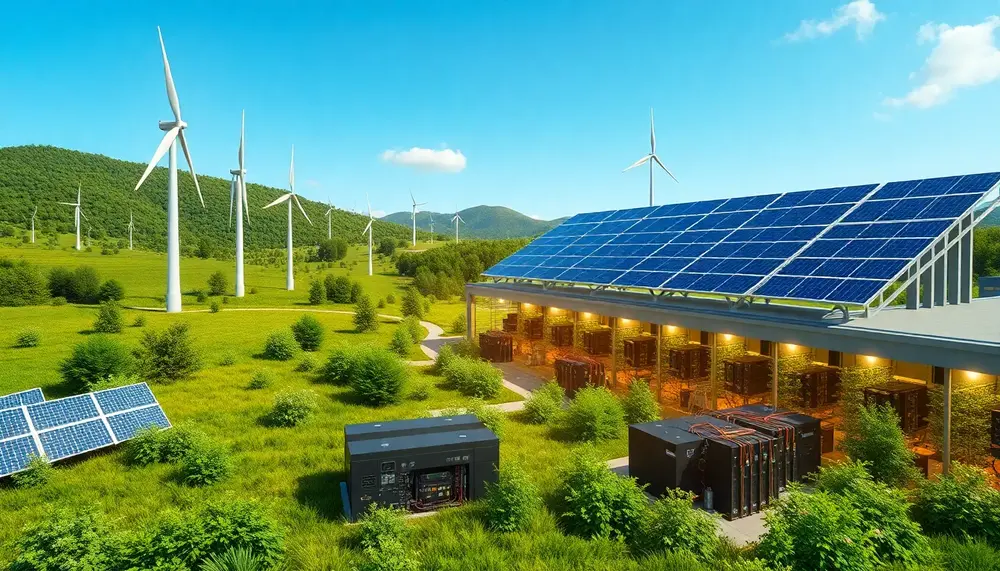
The Ethiopian government has announced that it will organize Bitcoin mining directly, rather than leaving it solely to private or foreign entities. The initiative will focus on utilizing unused electricity capacity, particularly from renewable sources like hydropower, to convert energy surpluses into tradable digital values. This program will be managed by a state investment fund that oversees other strategic projects.
Get $500 free Bitcoin mining for a free testing phase:
- Real daily rewards
- 1 full month of testing
- No strings attached
If you choose to buy after testing, you can keep your mining rewards and receive up to 20% bonus on top.
"The government sees state-controlled mining as a way to diversify revenue sources and reduce dependence on traditional export sectors," stated Prime Minister Ahmed.
Despite the positive outlook, challenges remain, including concerns about network stability and the need for clear regulatory frameworks as the state becomes a major miner. Ethiopia's approach aligns with a global trend where countries view Bitcoin mining as a strategic tool, with similar initiatives emerging in energy-rich nations.
In summary, Ethiopia's state-controlled Bitcoin mining initiative aims to leverage renewable energy for economic growth while addressing regulatory and stability concerns.
Bitcoin Miners Face $8,000 Loss per Mined BTC as Hashrate Declines
According to MacroMicro data, Bitcoin miners are currently facing an average mining cost of $101,000 per Bitcoin, while the market price hovers around $93,000, resulting in a potential loss of $8,000 per mined BTC. The network has seen a continuous decline in hashrate, leading to a decrease in mining difficulty for the seventh time in the last eight adjustments.
Michael Saylor has indicated that despite the current state of the mining network, there is still institutional interest in crypto, with inflows reaching local highs. The hashrate and mining difficulty have been declining since November 2025, suggesting that miners may be operating at a loss.
As of January 19, 2026, the average cost to mine one Bitcoin was $101,000, while it was trading at approximately $93,024. This discrepancy highlights the competitive nature of Bitcoin mining, where profitability is heavily influenced by the number of miners and their operational costs.
In conclusion, Bitcoin miners are currently facing significant financial challenges due to high operational costs and declining market prices, leading to a potential shift in mining strategies.
Riot Platforms Invests Millions and Partners with AMD for AI Data Centers
Riot Platforms is undergoing a strategic transformation by investing heavily in AI data centers, marking a significant shift from its traditional Bitcoin mining operations. The company has secured a partnership with AMD, which will serve as its first major customer for high-performance computing (HPC) services, with an initial capacity of 25 megawatts.
The deal guarantees Riot minimum revenues of $311 million over ten years, with potential expansion options that could increase the total to nearly $1 billion. This strategic pivot is part of Riot's response to the growing demand for AI infrastructure, allowing the company to diversify its revenue streams beyond Bitcoin mining.
Riot has also acquired approximately 809,000 square meters of land in Texas for $96 million, financing the purchase through the sale of 1,080 Bitcoins from its reserves. This move underscores the company's commitment to establishing itself as a leader in the AI data center market.
In summary, Riot Platforms is transitioning from a traditional Bitcoin miner to a hybrid technology and infrastructure provider, capitalizing on the increasing demand for AI computing power.
Bitcoin Hashrate Hits Four-Month Low Amidst AI Competition
The Bitcoin hashrate has fallen below 1 zettahash per second, reaching a four-month low, as miners shift their focus towards AI computing due to better profit margins. The average hashrate for the past seven days is reported at 993 EH/s, nearly 15% lower than its recent peak of 1,157 EH/s recorded in October 2025.
This decline reflects a broader trend in the mining sector, where companies are reallocating resources from Bitcoin mining to AI infrastructure. Experts suggest that the increasing competition for network power, driven by the AI boom, is contributing to this downward trend.
In conclusion, the Bitcoin mining landscape is evolving as miners adapt to changing market conditions, with a notable shift towards AI computing impacting the overall hashrate.
Sources:
- Äthiopien setzt auf staatliches Bitcoin-Mining mit erneuerbarer Energie
- Bitcoin-Miner im KI-Rausch: AMD-Deal beflügelt
- Bitcoin-Miner verlieren 8.000 Dollar pro geschürftem BTC, Hashrate sinkt
- Krypto-News: Äthiopien startet staatliches Bitcoin-Mining
- Bitcoin Mining: Riot Platforms investiert Millionen und sichert AMD als Partner
- Bitcoin Nachrichten: KI konkurriert um das Netz, Bitcoin Hashrate erreicht 4-Monats-Tief