Table of Contents:
Proof-of-Stake vs. Proof-of-Work: Why Cardano's Ouroboros Protocol Redefines "Mining"
Anyone searching for "Cardano mining" expecting to configure ASICs or overclock GPUs will immediately hit a fundamental architectural wall: Cardano does not use Proof-of-Work. The network has run entirely on Proof-of-Stake since its mainnet launch in September 2017, and its consensus mechanism — Ouroboros — was the first PoS protocol proven cryptographically secure in a peer-reviewed academic paper. This distinction matters enormously for anyone trying to generate ADA rewards, because the entire economic model, hardware requirement, and participation structure differs from Bitcoin or Ethereum's pre-Merge design at a fundamental level.
In Proof-of-Work systems like Bitcoin, miners compete to solve SHA-256 hash puzzles. The winner earns the block reward, while every other miner's energy expenditure produces zero return. Bitcoin's network currently consumes roughly 120–150 TWh annually — comparable to the electricity usage of Argentina. Cardano's PoS design reduces energy consumption by an estimated 99.99% compared to equivalent PoW networks. A single Cardano stake pool operator typically runs on hardware consuming 15–50 watts, roughly equivalent to a desktop LED light bulb running continuously.
Get $500 free Bitcoin mining for a free testing phase:
- Real daily rewards
- 1 full month of testing
- No strings attached
If you choose to buy after testing, you can keep your mining rewards and receive up to 20% bonus on top.
How Ouroboros Actually Selects Block Producers
Ouroboros divides time into epochs (5 days each) and further into slots (1 second each), creating 432,000 slots per epoch. A cryptographic lottery — based on verifiable random functions (VRF) — assigns slot leaders for each slot proportional to the ADA staked to a given pool. A pool controlling 1% of all staked ADA will, on average, be elected slot leader roughly 4,320 times per epoch. This probabilistic assignment eliminates the energy-wasting competition inherent in PoW: only one entity performs meaningful computational work per slot, rather than thousands racing simultaneously.
The practical implication is that "mining" ADA means operating or delegating to a stake pool, not purchasing mining rigs. If you want to understand the full technical and economic scope of participating in this system, the comprehensive breakdown of how ADA reward generation actually works covers pool mechanics, delegation dynamics, and the reward formula in detail. The current annualized staking yield sits between 3% and 5% depending on pool saturation and performance metrics.
Why "Mining" Terminology Still Persists
The word "mining" survives in Cardano discussions for two reasons: search behavior and functional analogy. Users familiar with Bitcoin naturally reach for "mining" as shorthand for "earning newly issued cryptocurrency." The analogy isn't entirely wrong — both processes create new coins and secure the network. The critical differences are:
- Capital requirement: PoW demands specialized hardware ($3,000–$10,000+ per ASIC unit); Cardano stake pool operation requires a server costing $200–$500, or simply an internet connection to delegate existing ADA holdings.
- Energy cost: Bitcoin miners typically spend 60–70% of revenue on electricity; Cardano pool operators spend under 5% on comparable infrastructure costs.
- Barrier to entry: Delegating ADA requires no technical knowledge — any wallet holder with 1+ ADA can participate immediately.
- Reward structure: PoW rewards are winner-takes-all per block; Ouroboros distributes rewards across all delegators proportionally within each epoch.
For those evaluating whether operating a pool versus simply delegating makes financial sense, a detailed profitability analysis comparing pool operation costs against delegation yields provides the concrete numbers needed to make that decision. And if you're approaching this ecosystem from scratch, a step-by-step walkthrough of setting up your first ADA staking position eliminates the guesswork around wallet setup, pool selection criteria, and delegation mechanics.
Hardware and Device Options for Cardano Staking: Machines, Laptops, and Mobile Devices Compared
Unlike Bitcoin or Ethereum Classic, Cardano's Ouroboros proof-of-stake protocol fundamentally changes the hardware equation. There is no hashing race, no ASIC advantage, and no GPU arms race. What matters instead is uptime, network connectivity, and the ability to run a node or delegate reliably. That said, the choice of hardware still has real consequences for performance, cost efficiency, and long-term sustainability of your staking operation.
Dedicated Staking Machines: The Professional Standard
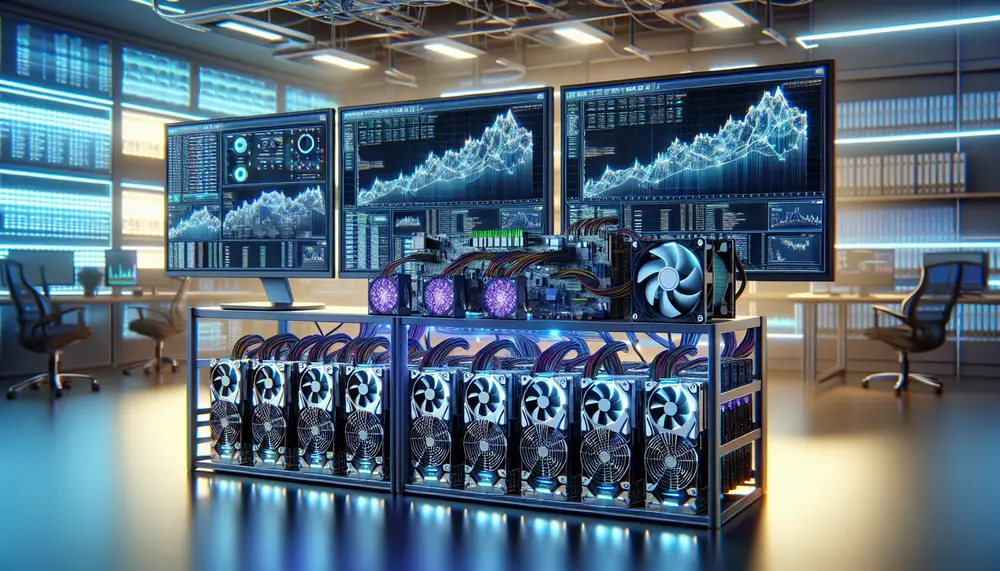
For anyone running a stake pool operator (SPO) node, a dedicated machine is the baseline expectation. A mid-range server with at least 16 GB RAM, a quad-core processor, and 256 GB SSD storage handles the Cardano node software comfortably. As of 2024, the blockchain database sits around 150 GB and grows steadily, so storage headroom matters. Many operators run bare-metal servers with Ubuntu 22.04 LTS, pairing a block-producing node with one or two relay nodes hosted in different geographic regions to minimize downtime risk. Following established hardware management protocols for dedicated staking setups is critical here — improper configuration leads to missed slot leadership and lost rewards. Power consumption for a lean staking server typically runs between 15–40W, making it far cheaper to operate than any proof-of-work mining rig.
Raspberry Pi 4 and Pi 5 builds have become a popular budget entry point. With 8 GB RAM models priced around $80–$100, some community operators run lean relay nodes on these devices, though they are not recommended as primary block-producing nodes due to I/O limitations under heavy sync load.
Laptops and Consumer Hardware: Viable but with Caveats
Running a Cardano node on a laptop is technically feasible, and for pure delegation — where you simply assign your ADA stake to an existing pool — it's entirely unnecessary. However, getting a Cardano staking environment running on a standard laptop is a practical starting point for those learning node operations before committing to dedicated infrastructure. The key constraint is thermal management: a laptop running the node software 24/7 will throttle under sustained load and suffer accelerated battery degradation. Machines with at least 8 GB RAM and an NVMe SSD perform acceptably, but sustained uptime is the real bottleneck — laptop hardware is simply not designed for always-on server workloads.
- Minimum RAM for node operation: 8 GB (16 GB strongly recommended)
- Storage type: SSD required; HDD sync times are prohibitively slow
- Network: Stable broadband with at least 10 Mbps upload; fiber preferred
- OS: Linux (Ubuntu/Debian) outperforms Windows for node stability
Mobile devices occupy a different niche entirely. Android smartphones cannot run a Cardano node in any meaningful capacity, but wallet apps like Daedalus mobile and Yoroi allow straightforward delegation of ADA holdings. For users curious about the technical limits of participating in Cardano's staking ecosystem through Android devices, the experience is limited to delegation management rather than active block production. The processing and RAM constraints of even flagship Android phones make full node operation impractical, and the battery and thermal impact would be unsustainable.
The bottom line for hardware selection: match your ambition to your infrastructure. Delegation requires nothing more than a wallet app. Running a competitive stake pool requires dedicated hardware, redundant relays, and a disciplined approach to monitoring and updates.
Cardano Mining Software Landscape: Tools, Features, and Performance Benchmarks
Understanding Cardano's software ecosystem requires confronting a fundamental architectural reality first: Cardano does not use Proof-of-Work, which means traditional GPU or ASIC mining software like CGMiner, NiceHash, or T-Rex simply does not apply here. Cardano operates on Ouroboros Praos, a Proof-of-Stake consensus protocol, which means the relevant "mining" software is the stack powering stake pool operations. For anyone serious about generating ADA rewards through block production, this distinction shapes every tooling decision you'll make.
Core Software Stack for Cardano Stake Pool Operation
The foundational software layer is cardano-node, the reference implementation maintained by Input Output Global (IOG). As of version 9.x, the node binary requires roughly 16–24 GB of RAM during normal operation, with peak memory usage during epoch transitions occasionally spiking higher. Paired with cardano-cli, operators can manage keys, submit transactions, and query on-chain data directly. This combination forms the baseline that every pool operator needs before layering in any additional tooling.
For monitoring and performance management, the ecosystem has matured considerably. Prometheus combined with Grafana dashboards represents the de facto standard for real-time metrics tracking — you can monitor block propagation times, peer connectivity, memory pressure, and missed slot leader checks at a glance. RTView, developed by IOG, offers a lighter alternative but has seen slower community adoption. Operators running multiple relay nodes typically see block propagation latency under 300ms on well-configured setups, which is critical for maximizing block production success rates. If you're evaluating the full spectrum of available solutions, a detailed comparison of tools that optimize your ADA reward generation is worth reviewing before committing to a configuration.
Pool Management Utilities and Automation Tools
Beyond the core node, several third-party tools have proven their worth in production environments:
- CNTools (part of the Guild Operators suite): A bash-based management framework that simplifies key rotation, transaction building, and pool parameter updates. Widely used among solo operators managing pools under 10M ADA delegation.
- Cardano Signer: An air-gapped signing utility that handles cold key operations securely without exposing keys to internet-connected machines.
- CNCLI: A community-developed CLI tool particularly valuable for validating block leadership schedules and cross-referencing actual block production against expected slots.
- Topology Updater: Automates peer discovery, essential for maintaining the 15–20 active outbound connections that keep relay nodes competitive.
Performance benchmarking in this context means measuring slot battle win rates, block adoption times, and epoch-over-epoch missed blocks rather than hashrate figures. A well-tuned block producer node with low-latency relay connections should achieve near-100% block adoption when slots are assigned. Operators regularly achieving below 5% missed blocks are considered to be running competitive infrastructure. The hardware decisions feeding into these outcomes are addressed in depth in our guide covering how to get the most out of your staking hardware setup.
One often underestimated factor is RTS (Runtime System) tuning for the Haskell-compiled cardano-node binary. Parameters like +RTS -N2 -A64m -qg -RTS can meaningfully reduce GC pauses and stabilize memory usage. Most guides skip this entirely, but operators who've spent time digging into the technical mechanics behind Cardano's reward generation system consistently report that RTS configuration is among the highest-leverage optimizations available at zero hardware cost.
Solo Staking vs. Mining Pools: Reward Structures, Entry Barriers, and Risk Distribution
The decision between running a solo stake pool and joining an existing pool is one of the most consequential choices in the Cardano ecosystem. It shapes your reward frequency, capital requirements, operational burden, and exposure to variance. Most participants default to delegating their ADA to an existing pool without fully understanding the economic tradeoffs — a mistake that can cost thousands of ADA in suboptimal returns over a multi-year horizon.
Solo Staking: The Economics of Running Your Own Pool
Operating a solo stake pool requires a minimum pledge — the amount of ADA you personally lock into your pool — which directly influences your pool's attractiveness to external delegators and your reward multiplier. The Cardano protocol uses the a0 parameter (currently set at 0.3) to reward higher pledge amounts, meaning a pool pledging 500,000 ADA will outperform an identical pool with 50,000 ADA pledge under equal conditions. Beyond pledge, you need a minimum of two nodes (block producer and relay), a registered on-chain pool certificate costing 500 ADA, and the technical infrastructure to maintain near-100% uptime.
The critical break-even point for solo operation is reaching roughly 1% of the total active stake, approximately 700–750 million ADA at current network levels, to guarantee block production in every epoch. Below this threshold, you're operating under high variance — you might produce zero blocks in a 5-day epoch even with millions of ADA staked. Many solo operators with 5–20 million ADA in stake face epochs with no rewards, which makes cash flow management genuinely challenging. For anyone seriously evaluating the financial case for running their own pool, a thorough profitability breakdown covering infrastructure costs and reward variance is essential reading before committing capital.
Pool Delegation: Smoothing Variance at the Cost of Margin
Delegating to an established pool trades variance for consistency. Pools charge two fee components: a fixed fee (minimum 340 ADA per epoch, hardcoded by protocol) and a variable margin (typically 0–5% of remaining rewards). A pool with a 1% margin and the minimum fixed fee on 50 million ADA stake will distribute approximately 97–98% of epoch rewards to delegators after fees. The practical reward difference between a 0% margin pool and a 3% margin pool on a 10,000 ADA delegation is roughly 3–4 ADA per epoch — marginal, but it compounds significantly over years.
Pool selection criteria go beyond margin numbers. Saturation level, historical block performance (measured as blocks minted vs. assigned slots), and operator track record matter enormously. A pool running at 95% of its saturation cap (currently ~68 million ADA per pool under k=500) with consistent 99%+ performance will outperform a low-margin pool with spotty uptime. If you're evaluating specific operators, a curated analysis of the leading pool operators covers performance metrics and fee structures in detail.
Risk distribution is fundamentally asymmetric between the two approaches:
- Solo operators absorb infrastructure failure risk, key compromise risk, epoch variance, and reputational risk if uptime suffers
- Delegators face smart contract risk (minimal on Cardano's UTXO model), pool operator exit risk, and the opportunity cost of choosing underperforming pools
- Multi-pool delegation across 3–5 pools with complementary saturation levels is a legitimate variance-reduction strategy for holders above 100,000 ADA
For newcomers building their initial position, starting with delegation to established pools while accumulating toward a viable solo pledge threshold is the most pragmatic path. The 500 ADA pool registration deposit is non-refundable, and the operational learning curve on solo pool management is steeper than most documentation suggests.
Profitability Analysis: ADA Rewards, Network Saturation, and Break-Even Calculations
Before committing capital to any Cardano staking or delegation setup, understanding the actual reward mechanics is non-negotiable. Cardano's Ouroboros protocol distributes ADA rewards every epoch (5 days), with the current annualized return hovering between 3% and 4.5% APY depending on pool performance, saturation levels, and pledge size. That figure sounds modest compared to DeFi yields, but it's backed by protocol-level guarantees rather than smart contract risk — a meaningful distinction for serious operators.
The reward formula itself depends on several variables: the pool's fixed fee (minimum 170 ADA per epoch as mandated by the protocol), the variable margin (typically 0–5% for competitive pools), total delegated stake, and the pool's luck factor over time. A pool operating at 50% saturation with a 2% margin and 170 ADA fixed fee will consistently outperform a 99% saturated pool charging identical fees — the math simply favors breathing room. Anyone doing a serious assessment of whether ADA staking generates meaningful returns needs to model these variables across multiple epochs, not just snapshot a single payout.
Network Saturation and Its Direct Impact on Yield
Saturation is the single most underestimated factor in Cardano reward calculations. Each pool has a saturation point (k-parameter), currently set so that optimal pool size equals total ADA supply divided by 500 — roughly 68 million ADA at full circulation. Once a pool exceeds this threshold, rewards per delegator begin declining sharply. A pool at 120% saturation can see per-ADA yields drop by 15–20% compared to an equivalent pool at 70% saturation. This is why tracking real-time pool metrics via tools like pool.pm or Adapools matters far more than simply picking a household-name pool. If you want to identify which specific pools currently offer the best combination of performance and saturation headroom, regular due diligence every 2–3 epochs is the baseline expectation.
Running Your Break-Even Numbers
For node operators running a stake pool, the break-even calculation must account for infrastructure costs that individual delegators never face. A typical cloud-hosted stake pool (block producer + two relays) runs $80–$150/month on AWS or equivalent. At a 3.5% APY and ADA priced at $0.45, a pool needs roughly 5–7 million ADA in delegated stake just to cover operational costs after the fixed fee. Below that threshold, you're subsidizing the network from your own pocket.
Individual delegators face a different but equally important calculation:
- Entry costs: Wallet setup requires a 2 ADA deposit for stake key registration (refundable on deregistration)
- Compounding lag: Rewards begin flowing after a 15–20 day delay (3 epochs) following initial delegation
- Opportunity cost: Compare 3.5–4.5% ADA APY against liquid alternatives with similar risk profiles
- Pool switching costs: Each delegation change resets the epoch clock, costing one full epoch of rewards
Hardware-focused participants — those who explored running lightweight nodes on consumer hardware — quickly discover that home setups require stable uptime above 99% to avoid missed block assignments, which directly erodes profitability. A single missed block opportunity at current reward levels can cost an operator 500+ ADA, wiping out weeks of fixed fee accumulation. The math rewards reliability over raw hardware power — a fundamental difference from proof-of-work economics.
Zero-Cost Entry Strategies: Free Cardano Mining Platforms, Cloud Mining, and Their Trade-Offs
The appeal of entering the Cardano ecosystem without upfront hardware investment is understandable, but "free" rarely means without cost. Zero-cost entry strategies range from browser-based staking simulators marketed as mining tools to legitimate cloud mining contracts that defer hardware expenses into subscription fees. Understanding the distinction between genuine opportunity and marketing fiction determines whether you walk away with real ADA or wasted time.
Free Platforms: What They Actually Offer
Most platforms advertising free Cardano mining are, in technical reality, staking delegation interfaces or reward aggregators built on top of Cardano's Proof-of-Stake protocol. They allow users to delegate ADA holdings to stake pools without running a node, generating approximately 4–5% annual returns on delegated funds. This is legitimate and valuable, but it requires owning ADA first — making the entry point capital-dependent despite the "free" label. If you're exploring how to get started without hardware costs, the process of entering ADA's ecosystem at zero hardware cost is well-documented and follows a clear progression through wallet setup and pool selection.
Browser-based mining applications claiming to mine Cardano via CPU are almost universally fraudulent or misleading. Since ADA operates on Ouroboros PoS, there is no mining algorithm compatible with standard CPU or GPU computation. Any platform presenting a mining dashboard with rising ADA balances but no withdrawal mechanism is running a points-farming scheme, not generating actual on-chain rewards.
Cloud Mining Contracts: Deferred Costs, Real Risks
Cloud mining for Cardano exists in a gray zone. Legitimate providers lease hash power for PoW coins that can then be converted to ADA, rather than mining ADA directly. Contracts from providers like ECOS or StormGain typically range from $50 to $500 for 12–24 month terms, with maintenance fees of 0.03–0.05 USD per terahash per day eating into margins. The math rarely favors the retail buyer: at current difficulty levels and ADA price volatility, most contracts break even only if ADA appreciates significantly during the contract period.
Mobile-based approaches represent another zero-cost entry point worth scrutinizing. Several Android applications claim to mine or earn ADA passively, and while most are reward aggregators or faucet systems, some integrate legitimately with testnet environments. The workflow for running ADA-related operations on Android confirms that genuine participation is possible but constrained — typically limited to lightweight node interaction or staking management rather than actual block production.
When evaluating any free or low-cost platform, apply these filters:
- Withdrawal transparency: Can you extract earned ADA to an external wallet within 24–48 hours?
- On-chain verifiability: Does the platform provide a stake pool ticker or transaction hash confirming your delegation?
- Fee structure disclosure: Are pool margins, fixed fees, and cloud contract maintenance costs stated upfront?
- Regulatory registration: Is the provider registered in a jurisdiction with financial services oversight?
Serious participants who move beyond zero-cost experimentation quickly discover that dedicated software for optimizing ADA earnings provides far more control and transparency than any packaged platform. Free entry strategies work best as an educational bridge — a way to understand epoch cycles, reward calculations, and pool dynamics before committing meaningful capital to self-operated staking infrastructure.
Step-by-Step Setup for Beginner Cardano Miners: Wallets, Nodes, and First Stake Delegation
Before you delegate a single ADA or run your first node, you need a solid foundation. Cardano's proof-of-stake architecture means your entry point looks fundamentally different from Bitcoin or Ethereum Classic mining. There's no GPU rig to assemble, no overclocking spreadsheet to maintain — but the wallet and node setup requires careful attention to detail, especially around key management and network synchronization. Rushing this phase is the number one mistake beginners make, and it often results in lost rewards or, worse, lost funds.
Setting Up Your Cardano Wallet
Daedalus is the full-node wallet maintained by IOHK and remains the gold standard for serious participants. Unlike light wallets, Daedalus downloads the entire Cardano blockchain — currently over 120 GB — which means the initial sync can take 4 to 12 hours depending on your hardware and internet connection. If you're exploring participation from a lower-powered device, you should read up on how laptop-based Cardano participation works before committing to a full-node wallet setup on that hardware. Eternl and Lace are solid light wallet alternatives that connect to remote nodes, offering faster onboarding without sacrificing security for delegation purposes.
When creating your wallet, Daedalus generates a 24-word recovery phrase. Write this down on paper — not in a screenshot, not in a cloud note. Store it in two separate physical locations. This phrase is the only way to recover your funds if your device fails. Never enter it on any website or share it with anyone claiming to be Cardano support.
Running a Node and Delegating Your First Stake
If you want to go beyond simple delegation and actually run a stake pool node, you'll need a server with at minimum 16 GB RAM, a modern quad-core CPU, and 150+ GB of SSD storage. Most successful small pool operators use VPS providers like Hetzner or AWS, running Ubuntu 22.04 LTS. The cardano-node software is open-source and available via IOHK's GitHub repository. Installation involves compiling from source or using pre-built binaries, configuring topology files, and syncing to the mainnet — a process that typically takes 6 to 18 hours on a fresh server.
For those who want to understand the full software ecosystem before spinning up infrastructure, reviewing the tools that experienced operators use to maximize pool earnings gives critical context on monitoring, logging, and performance tuning. Once your node is synced, delegation from your wallet is straightforward:
- Open Daedalus or your chosen wallet and navigate to the Staking tab
- Browse the stake pool list and filter by saturation level (aim below 80%) and fixed fee (network minimum is 170 ADA)
- Select a pool, confirm the delegation transaction — it costs roughly 2.17 ADA in deposit plus a small transaction fee
- Rewards begin accruing after approximately 15 to 20 days (3-4 epochs of 5 days each)
If you're starting from absolute zero and want a structured walkthrough of the entire onboarding process, the foundational steps for entering the Cardano ecosystem cover wallet creation through first delegation in practical detail. Mobile participants should note that Android-based interaction has real limitations — the realities of running Cardano participation on Android are worth understanding before relying on a phone as your primary interface. Your delegation choice matters more than most beginners realize: a pool with high pledge, consistent uptime above 99.5%, and a reasonable margin under 5% will meaningfully outperform a poorly managed pool over a 12-month horizon.
Cardano Network Upgrades, Governance Shifts, and Their Direct Impact on Miner Rewards
Cardano's development roadmap has never been static, and every major protocol upgrade directly reshapes the economics for stake pool operators. The Vasil hard fork in September 2022 reduced transaction sizes by up to 30% and introduced reference inputs alongside Plutus V2, which meaningfully increased throughput and brought more DeFi activity — and therefore more transaction fee volume — onto the chain. For pool operators, higher network utilization translates into denser blocks and a larger fee pool to distribute among delegators.
The transition through the Chang hard fork in 2024 marked Cardano's entry into the Voltaire era, shifting governance from IOHK's centralized oversight to an on-chain system driven by the Constitutional Committee, Delegated Representatives (DReps), and stake pool operators themselves. This is not cosmetic change. SPOs now hold direct voting weight in parameter governance, meaning the community can actively propose and ratify adjustments to the monetary expansion parameter (rho), currently set at 0.003, and the treasury cut (tau) at 0.2. Both figures determine what percentage of the reserve flows into rewards each epoch versus the treasury — changes to these parameters have immediate arithmetic consequences for every pool's reward calculations.
Parameter Changes That Directly Affect Pool Revenue
The most consequential levers under community governance are the minimum fixed fee (currently 340 ADA per epoch), the saturation point (k parameter) — set at 500, defining the target number of pools — and the pledge influence factor (a0). A proposal to raise k to 1,000 would halve the saturation threshold per pool, forcing operators running large pools to split infrastructure or accept reduced rewards. Conversely, increasing a0 from its current 0.3 would reward operators who pledge higher personal ADA more aggressively, directly benefiting well-capitalized solo operators over smaller community pools. Anyone evaluating long-term yield projections should track active governance proposals through tools like Cardanoscan and the official governance portal.
What Upcoming Development Phases Mean in Practice
The Hydra Layer-2 scaling protocol and Mithril certificate system are both live in production phases. Mithril in particular reduces the bootstrapping time for new nodes from days to under two hours by enabling lightweight chain-state validation — this lowers the operational barrier for launching a stake pool and will likely increase competitive pressure on rewards as more operators enter the market. For a grounded picture of where protocol economics are heading, the analysis on how Cardano's evolving infrastructure creates new yield opportunities provides useful forward-looking context.
Operators who want to remain competitive need to monitor three things closely: governance votes on monetary parameters, epoch-by-epoch changes in active stake and pool saturation, and the rollout schedule of Leios (Input Endorsers), which is designed to decouple block production from settlement and could fundamentally alter how fees accumulate per epoch. Those still assessing whether running infrastructure makes financial sense should cross-reference current reward formulas covered in the detailed breakdown of Cardano staking profitability, while operators new to the protocol mechanics will find a solid technical foundation in the comprehensive overview of how Cardano's reward system functions.
- Action item: Register as a DRep or delegate to an active one — SPOs who ignore governance risk having parameters shifted against their margins
- Action item: Model scenarios for k=1,000 and a0=0.5 against your current pledge and stake to stress-test future revenue
- Action item: Deploy Mithril on your relay nodes now — it's production-ready and operationally mandatory as sync requirements scale with chain size
FAQ about Cardano's Proof-of-Stake Mechanism
What is Cardano's consensus mechanism?
Cardano uses a Proof-of-Stake (PoS) consensus mechanism called Ouroboros, which allows ADA holders to delegate their coins to stake pools to earn rewards instead of using energy-intensive mining.
How does Ouroboros select block producers?
Ouroboros divides time into epochs and slots, using a cryptographic lottery to assign slot leaders for each slot based on the amount of ADA staked. This process eliminates competitive mining, allowing for efficient block production.
What are the benefits of Cardano's PoS over traditional mining?
Cardano's PoS significantly reduces energy consumption (up to 99.99% less than Proof-of-Work), lowers the capital requirements for participation, and allows for more inclusive participation as anyone with ADA can delegate without technical knowledge.
How can individuals participate in Cardano's staking?
Individuals can participate by delegating their ADA to a stake pool using a wallet, such as Daedalus or Yoroi. They can earn rewards based on the performance and saturation level of the selected pool.
What are the expected returns from staking ADA?
The annualized staking yield for ADA typically ranges between 3% and 5%, depending on factors like pool performance, saturation, and the amount of ADA delegated.