Table of Contents:
Bitcoin Mining Faces Challenges Amidst Severe Winter Storms in the US
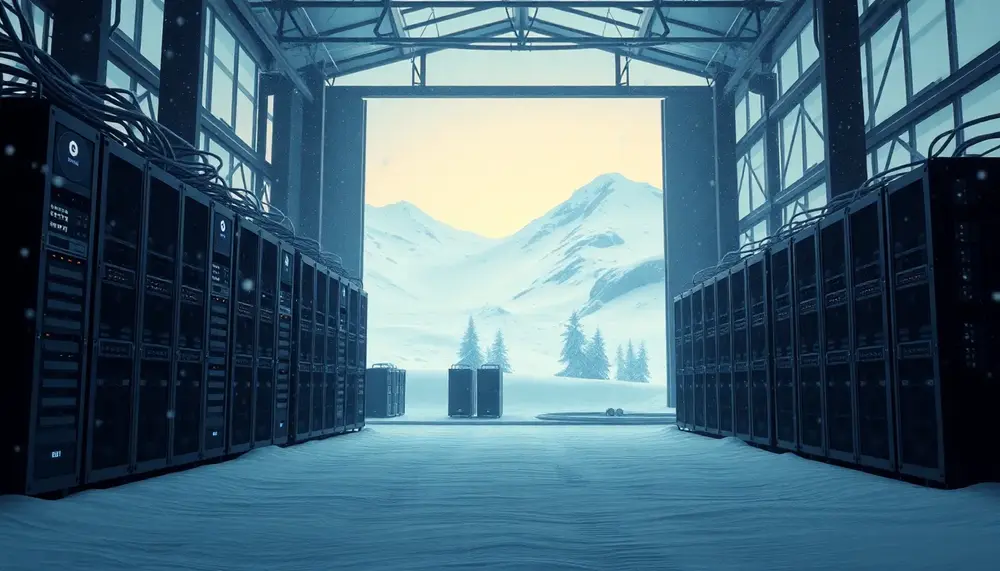
As a severe winter storm, named Fern, has swept across large parts of the United States, the Bitcoin mining industry is facing extraordinary challenges. The extreme cold and high energy demands have pushed regional power grids to their limits, forcing energy-intensive mining operations in several states to drastically reduce their activities to maintain grid stability and prevent outages.
This development has led to significantly lower Bitcoin production and a noticeable decline in network performance. Recent data indicates that major US Bitcoin mining companies have had to sharply reduce their daily Bitcoin yield to prioritize the energy needs of the population. According to on-chain analyses and industry tweets, daily production figures for several publicly traded miners have dropped considerably within days: CleanSpark (CLSK) fell from approximately 22 to 12 BTC per day, Riot Platforms (RIOT) from 16 to just 3 BTC, Marathon Digital (MARA) from 45 to 7 BTC, and Iris Energy (IREN) from 18 to 6 BTC.
Get $500 free Bitcoin mining for a free testing phase:
- Real daily rewards
- 1 full month of testing
- No strings attached
If you choose to buy after testing, you can keep your mining rewards and receive up to 20% bonus on top.
“This coordinated retreat of computing power has measurable effects on the Bitcoin network: the global hashrate—a measure of the total computing capacity of the system—has fallen significantly as operators have partially shut down their machines.”
The background for this drastic reduction is the strain on power grids due to extreme heating energy demands and weather-related disruptions. Operators in states with deregulated energy supply, such as Texas, participated in so-called demand-response programs, where large consumers like mining farms temporarily reduce their power intake to relieve grid operators during critical times.
In the short term, this development does not signal structural damage to the Bitcoin network; rather, it demonstrates its flexibility in the face of external pressures. The difficulty adjustment mechanism of the Bitcoin protocol automatically adjusts the mining difficulty over time, allowing the system to stabilize even after temporary hashrate fluctuations.
Overall, the recent winter storms in the US have impressively shown how much the digital Bitcoin ecosystem still depends on physical infrastructure and energy supply. When miners have to throttle their computing power, it becomes evident that scaling and efficiency in the long term will not only be determined by more hardware but also by better technological architecture.
In this context, the presale of Bitcoin Hyper, which has already raised around $31 million in capital, signals exceptionally strong investor interest. The project aims to combine the security and global acceptance of Bitcoin with the high speed and scalability of Solana technology, potentially allowing for the creation of a genuine DeFi and app ecosystem around Bitcoin without the known limitations of the mainnet.
In summary, the Bitcoin mining industry is currently facing significant challenges due to severe weather conditions, leading to a reduction in production and highlighting the need for improved infrastructure and technology in the future.
Nvidia's $2 Billion Investment in CoreWeave: Winners and Losers in Bitcoin Mining
Nvidia's deepened partnership with CoreWeave has increased pressure on Bitcoin miners transitioning to AI infrastructure. Following Nvidia's announcement of a new $2 billion investment in CoreWeave, the stocks of most Bitcoin miners that have shifted their business plans to focus on AI infrastructure saw declines, with Cipher Mining (CIFR), CleanSpark (CSPK), Iren (IREN), and TeraWulf (WULF) dropping between 5% and 9%.
This decline reflects investor concerns that CoreWeave's growing leadership in the AI infrastructure market could limit the upside potential for other players. James Van Straten, a senior Bitcoin analyst at CoinDesk, noted, “The current declines in AI and HPC associated with Bitcoin miners signal a commitment between NVIDIA and CoreWeave, with GPU allocation increasingly prioritized in favor of this partnership.”
Core Scientific (CORZ) was the only miner to record gains on the day, with its shares rising nearly 2%. Despite having attempted to acquire CoreWeave in 2025 unsuccessfully, Core Scientific maintains a multi-year data center agreement with CoreWeave. Additionally, Hut 8 (HUT), another miner diversifying into AI hosting and high-performance computing, saw its shares increase by 0.2%.
The shift towards AI is not new, as Bitcoin miners, once solely focused on validating blockchain transactions, have repurposed their data centers for more profitable tasks, especially as mining rewards shrink and energy costs rise. Nvidia's recent move suggests that these resources may increasingly flow to larger, more integrated players like CoreWeave, forcing smaller companies to adapt or consolidate.
In conclusion, Nvidia's investment in CoreWeave has created a challenging environment for Bitcoin miners, with significant stock declines and a clear indication of the competitive landscape shifting towards AI infrastructure.
Sources: