Table of Contents:
The Mechanics of Bitcoin Mining: From CPU Origins to ASIC Dominance
Bitcoin mining is fundamentally a computational race to solve a cryptographic puzzle — specifically, finding a SHA-256 hash that falls below a dynamically adjusted target value. Every ~10 minutes, one miner wins the block reward by producing a valid hash, and the entire network recalibrates its difficulty target every 2,016 blocks to maintain that cadence regardless of how much total hashrate has been added or removed. Understanding this mechanism is the prerequisite for grasping why hardware evolution wasn't optional — it was economically inevitable.
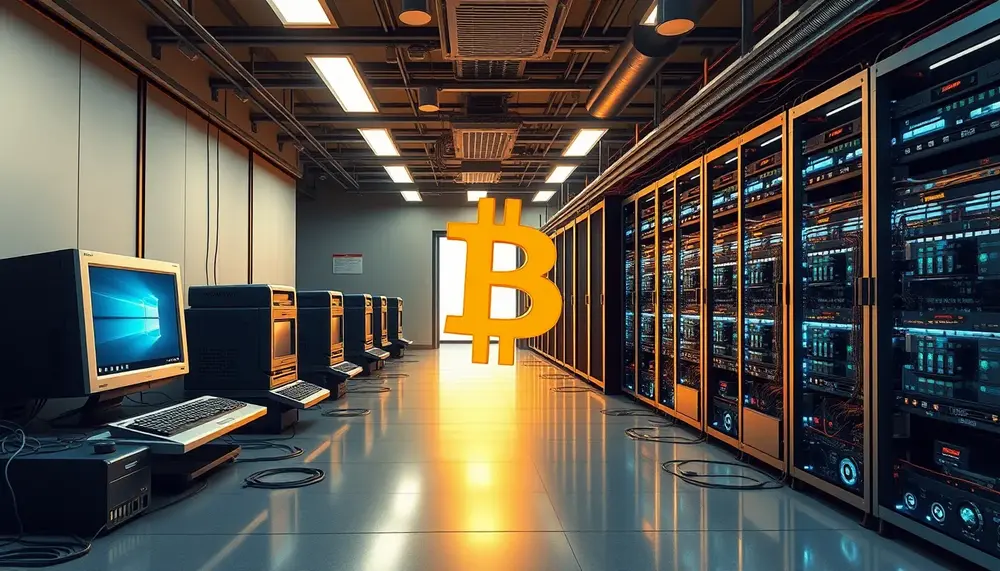
When Satoshi Nakamoto mined the genesis block in January 2009, a standard CPU running at roughly 50 MH/s was sufficient. The network hashrate was negligible, difficulty sat at 1, and a single laptop could earn block rewards. That window closed fast. As mining hardware progressed through increasingly specialized generations, each transition rendered the previous technology economically obsolete almost overnight. By mid-2010, GPU mining had already pushed CPUs out of profitability, delivering 10–100x performance improvements for SHA-256 workloads due to their massively parallel architecture.
Get $500 free Bitcoin mining for a free testing phase:
- Real daily rewards
- 1 full month of testing
- No strings attached
If you choose to buy after testing, you can keep your mining rewards and receive up to 20% bonus on top.
The Hardware Arms Race: GPU, FPGA, and the ASIC Revolution
Field-programmable gate arrays (FPGAs) bridged the gap between GPUs and dedicated chips from 2011 to 2013, offering better energy efficiency around 100–200 MH/s per watt compared to GPU figures of roughly 0.3–0.5 MH/s per watt. But the real inflection point came with Application-Specific Integrated Circuits (ASICs). Bitmain's Antminer S1, released in 2013, delivered 180 GH/s — that's 180,000 MH/s — making every GPU farm in existence instantly uncompetitive. Today's flagship machines like the Antminer S21 Pro operate at 234 TH/s with an efficiency of 15 J/TH, representing a roughly 1,000,000x improvement in raw hashrate over those early CPU days.
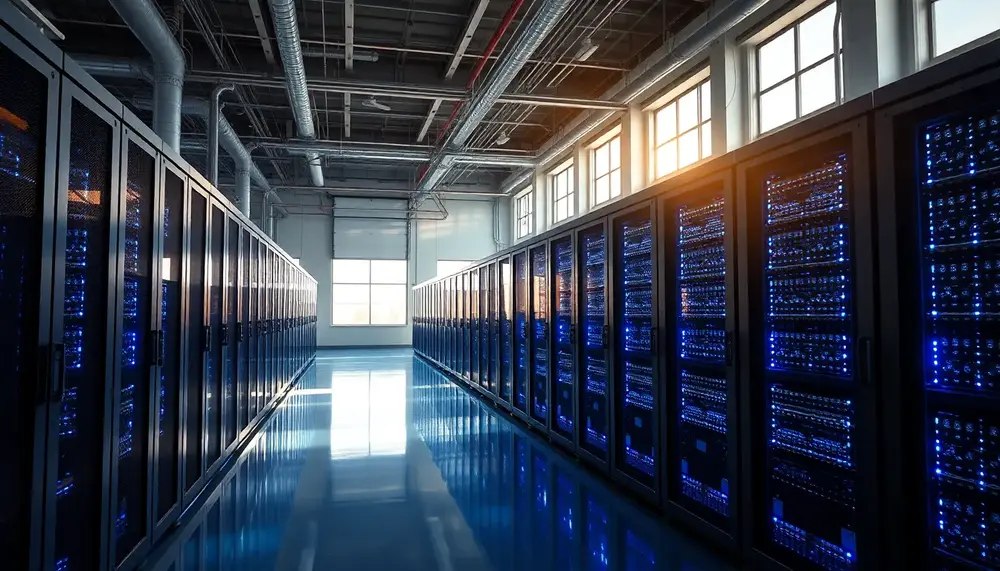
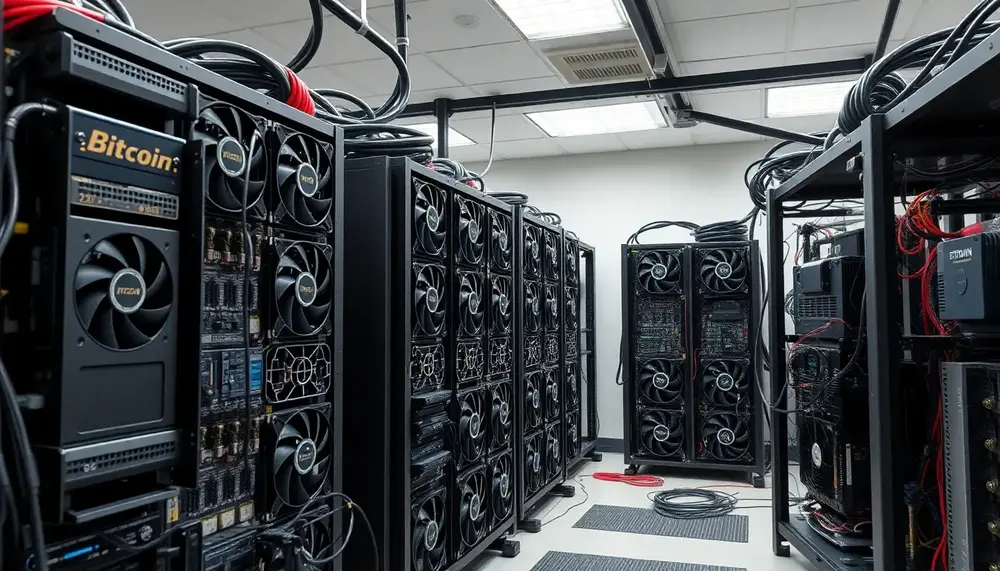
The mechanics of an ASIC miner are worth understanding in detail. The chip contains millions of SHA-256 computation units operating in parallel, hardwired to perform exactly one function. There is no flexibility, no reprogramming — that single-purpose design is precisely why ASICs achieve efficiencies impossible for general-purpose silicon. Current 5nm and 3nm process nodes push thermal design power (TDP) to its physical limits, meaning cooling infrastructure — immersion cooling, hydro cooling, forced air — has become as strategically important as the chips themselves.
Difficulty Adjustment: The Network's Self-Regulating Engine
The difficulty adjustment algorithm (DAA) is what makes Bitcoin's issuance schedule predictable and attack-resistant simultaneously. If 20% more hashrate joins the network, the next adjustment increases difficulty proportionally, squeezing margins across the entire mining fleet. This creates a constant pressure toward efficiency: operators running older hardware with worse J/TH ratios are perpetually at risk of being pushed below their breakeven hashprice. Hashprice — denominated in USD per TH/s per day — collapsed from over $0.30 in 2021 to under $0.07 during the 2022–2023 bear market, bankrupting several large public miners who had overleveraged on hardware purchases.
For miners evaluating long-term positioning, the hardware efficiency curve shows no sign of slowing, though physical limits imposed by semiconductor physics are approaching. Some researchers speculate that entirely new computational paradigms could eventually disrupt ASIC dominance, and the potential role of quantum hardware in future mining landscapes remains a genuinely open question. For those assessing operational models rather than building their own infrastructure, platforms like those explored in this detailed look at modern hash-based investment structures offer a different angle on accessing mining economics without direct hardware ownership.
Mining Hardware Economics: Calculating True Costs and ROI Before You Invest
Most miners blow their budget in the first 90 days — not because Bitcoin dumped, but because they underestimated total cost of ownership. The sticker price of an ASIC miner is just the entry ticket. The real economics unfold over 18–36 months, shaped by electricity contracts, hardware depreciation, network difficulty adjustments, and the often-overlooked cost of capital.Breaking Down the True Cost Structure
Take the Bitmain Antminer S21 Pro as a real-world example. At $3,200 USD, it delivers 234 TH/s at 15.5 J/TH. Sounds impressive. But strip away the marketing: at $0.07/kWh industrial electricity pricing, you're burning roughly $42 per month in power alone. Add hosting fees ($60–$80/month at managed facilities), pool fees (1–2%), and hardware amortization over a 3-year cycle, and your effective break-even Bitcoin price climbs fast. Before committing capital, understand exactly how to model your expected returns across multiple Bitcoin price and difficulty scenarios — not just the optimistic one. The cost baseline varies dramatically by geography. Industrial power in Texas or Kazakhstan can sit at $0.03–0.05/kWh, while residential miners in Western Europe often pay $0.25–0.35/kWh, making home mining economically unviable with current-generation hardware. Emerging markets like Pakistan show how hardware acquisition costs and local electricity subsidies create entirely different economic dynamics that can either accelerate or destroy ROI projections.Variables That Destroy Projections
Static ROI calculators are dangerous. The Bitcoin network's difficulty adjustment — which recalibrates every 2016 blocks — directly compresses your hash rate's relative value as more miners come online. In 2024, network difficulty increased by roughly 35% year-over-year. That means a machine earning $8/day in January was earning closer to $5.90/day by December, assuming flat Bitcoin price. Your calculations need to account for this erosion. The key cost variables to stress-test in any projection:- Electricity rate sensitivity: Model at 3 different tariff levels — optimistic, realistic, worst-case
- Hardware resale value: S19-series miners lost 70–80% of value within 24 months of release
- Difficulty growth assumptions: Conservative models use 5–10% monthly difficulty increase during bull markets
- Downtime and maintenance: Budget 5–8% annual revenue loss for realistic operational friction
- Hosting vs. self-hosting: Managed facilities add cost but eliminate infrastructure buildout, cooling, and security overhead
Electricity as the Decisive Profitability Factor in Bitcoin Mining
Ask any serious miner what keeps them up at night, and the answer is almost never hardware — it's the electricity bill. Power costs typically account for 60–80% of total operational expenditure in a mining operation, which makes energy pricing the single variable with the most leverage over your bottom line. A miner running Antminer S19 XPs at $0.04/kWh can generate healthy margins even during bear markets, while the same hardware becomes a loss machine at $0.12/kWh. That spread is not marginal — it's existential.
The math is straightforward but often underestimated in practice. A single S19 XP draws roughly 3,010 watts. Running 100 units continuously consumes approximately 301 kW, translating to 7,224 kWh per day. At $0.06/kWh, that's $433 in daily power costs alone — before you account for cooling overhead, which typically adds another 10–15% to consumption in hot climates. Understanding how to account for every component of your power draw, including transformers, PDUs, and facility losses, separates accurate forecasting from wishful thinking.
The Break-Even Threshold and Why It Shifts Constantly
Your break-even electricity price is not a fixed number — it moves with Bitcoin's spot price, network difficulty, and transaction fee revenue. During the 2022 bear market, many industrial miners with contracts above $0.07/kWh were forced to curtail operations or sell hardware at a loss. Conversely, operations locked into long-term power purchase agreements at $0.03–0.04/kWh — common in Paraguay, parts of Texas, and certain Canadian provinces — remained profitable even when BTC dropped below $16,000. Whether mining pencils out economically comes down almost entirely to which side of that cost curve you're sitting on.
Network difficulty adjusts every 2,016 blocks based on total hashrate. When prices rise and more miners come online, difficulty increases and your revenue per terahash drops — even if Bitcoin's price hasn't moved. This means your electricity cost benchmark needs to be re-evaluated continuously, not just at launch.
Structural Advantages: Renewable Energy as a Competitive Moat
The most durable competitive advantage in mining today is access to stranded or curtailed renewable energy. Hydroelectric overflow in Iceland and British Columbia, flared natural gas in the Permian Basin, and curtailed wind in West Texas all offer electricity at $0.02–0.03/kWh or below — rates that conventional grid consumers never see. The shift toward renewables in mining infrastructure is not just an ESG talking point; it's a hard economic strategy that allows operations to survive difficulty spikes that wipe out competitors on conventional tariffs.
Practical steps to optimize your electricity position include:
- Negotiate interruptible power contracts — accepting curtailment during grid stress events in exchange for rates 30–50% below standard industrial tariffs
- Co-locate with energy generators directly rather than purchasing through a utility intermediary to eliminate transmission and distribution markups
- Implement dynamic load management to reduce consumption during peak pricing windows in deregulated markets like ERCOT
- Model all-in cost per kWh, including demand charges and power factor penalties, which can inflate nominal rates by 15–25%
The broader economic dynamics that shaped mining margins through 2023 made clear that hardware efficiency improvements are reaching a plateau of diminishing returns. The next frontier of profitability optimization runs directly through the power purchase agreement, not the ASIC spec sheet.
Mining Pool Strategies: Selecting, Configuring and Benchmarking Your Setup
Choosing the wrong mining pool can cost you 2–5% of your revenue before a single block is even found. Pool selection isn't just about fee structures — it's a strategic decision that affects your payout frequency, variance exposure, and long-term profitability. With over 20 active pools currently competing for hashrate, the differences between them are subtle but financially significant at scale.
Evaluating Pool Economics: Fees, Payout Schemes, and Hashrate Distribution
The two dominant payout models are FPPS (Full Pay Per Share) and PPS+ (Pay Per Share Plus). FPPS pools like F2Pool and Antpool pay both the block subsidy and transaction fees proportionally — critical when mempool fees spike above 10 sat/vByte, as happened repeatedly in 2023–2024. Standard PPS pools absorb transaction fee variance themselves, which can work against miners during high-fee periods. PPLNS (Pay Per Last N Shares) schemes offered by pools like ViaBTC reward loyalty but expose solo operators to significant income variance over shorter windows.
Pool fees typically range from 0% to 4%, but a 0% fee pool is rarely free — they compensate through less favorable payout calculations or delayed settlements. Foundry USA (currently holding ~30% of global Bitcoin hashrate) charges 0% but operates a proprietary model with financing services attached. Comparing effective yield over 30-day periods across pools, rather than advertised fees alone, is the only honest way to evaluate cost. If you're new to the mechanics of joining and setting up your first connection, working through a structured process for getting your miner onto a pool will prevent common configuration errors that silently reduce your accepted share rate.
Configuration, Latency, and the Hidden Cost of Stale Shares
Latency between your miner and the pool server directly impacts your stale share rate. Every stale share is rejected work — hashrate you paid electricity for but received nothing in return. At 1% stale rate on a 100 PH/s farm, you're effectively running at 99 PH/s. Choosing a stratum endpoint geographically close to your operation matters: a miner in Texas connecting to an Asian pool server can see 180–220ms round-trip times versus 8–12ms for a domestic endpoint. The correct setup of your stratum URL and port parameters is the foundation for minimizing this latency overhead.
Always configure three stratum endpoints as failover: primary, secondary, and tertiary. Miners running single-endpoint configurations lose all revenue during pool outages, which occur even at major pools 2–4 times per year. Use port 3333 for standard connections, but test port 443 as an alternative — many corporate and datacenter firewalls block non-standard ports, and 443 bypasses this without sacrificing performance.
Benchmarking your pool connection requires more than a 24-hour test window. Run parallel comparisons over 7–14 days to account for difficulty adjustment cycles and mempool fee variance. Track four metrics rigorously: accepted shares, rejected shares, stale shares, and effective hashrate as reported by the pool versus your local hardware dashboard. A discrepancy exceeding 1.5% between local and pool-reported hashrate warrants investigation. For operators considering running their own infrastructure, understanding what building a pool operation actually requires provides useful context even if you never pursue it. Before committing long-term hashrate to any pool, running a methodical pool performance test gives you the data to make that decision confidently.
- Minimum evaluation period: 7 days with consistent hashrate directed to a single pool
- Acceptable stale share rate: below 0.5% for local operations, below 1% for remote sites
- Payout threshold: set low enough to recover funds quickly if you switch pools — 0.001 BTC is standard
- Monitoring: use pool APIs to pull real-time hashrate data into your own dashboard rather than relying solely on pool-facing statistics
Top Mining Pool Platforms Compared: NiceHash, Binance, Foundry USA and Beyond
Choosing the right mining pool isn't just about fee percentages — it's about payout reliability, hashrate transparency, geographic server infrastructure, and whether the pool's incentive structure actually aligns with your hardware setup. After evaluating dozens of operations, four platforms consistently stand out for serious miners: NiceHash, Binance Pool, Foundry USA, and F2Pool. Each serves a distinctly different miner profile.
NiceHash: The Marketplace Model vs. Traditional Pooling
NiceHash operates fundamentally differently from conventional pools. Rather than mining Bitcoin directly, you're selling your hashrate on an open marketplace to buyers who then mine on your behalf. This model delivers payouts in Bitcoin regardless of which algorithm your hardware is running, making it attractive for miners with mixed GPU/ASIC rigs. The platform charges a 2% fee for sellers (miners), and payouts threshold starts at just 0.001 BTC — unusually low for the industry. If you're just getting started with the platform's ecosystem, understanding how to set up and configure your first pool connection on NiceHash can save hours of troubleshooting. The trade-off: hashrate prices fluctuate with marketplace demand, meaning your effective earnings can vary 15–30% week over week.
Binance Pool launched in 2020 and has grown to consistently hold 3–5% of Bitcoin's global hashrate. Its core advantage is deep integration with the Binance exchange ecosystem — miners can instantly convert BTC earnings, access lending products, and use merged mining for altcoins like LTC simultaneously. The fee structure sits at 0.5% for BTC, among the lowest in the industry. Binance uses a FPPS (Full Pay Per Share) payout model, meaning you receive both the block reward and transaction fees proportionally. For a detailed look at how to model your actual returns, using Binance's profitability tools to project monthly earnings is an underutilized feature that factors in difficulty adjustments automatically.
Foundry USA: The Institutional Heavyweight
Foundry USA Pool has dominated North American mining since 2020, regularly commanding 25–30% of Bitcoin's total hashrate — making it the single largest pool globally by most metrics. It's backed by Digital Currency Group and built specifically for institutional and large-scale commercial miners. Minimum participation is effectively gated by scale; the pool doesn't advertise a public sign-up flow for sub-1 PH/s operations. Foundry uses FPPS+ payouts and charges 0% fees for qualified participants, instead monetizing through financing and equipment services. Understanding what drives Foundry's hashrate dominance and what it means for network decentralization is critical context for any miner evaluating long-term pool risk.
F2Pool deserves mention as the longest-running major pool still operating, founded in 2013. It supports 40+ cryptocurrencies and charges 2.5% PPS+ for Bitcoin. AntPool, operated by Bitmain, controls roughly 10–15% of global hashrate and offers zero fees during promotional periods, though its China-based infrastructure raises latency concerns for North American miners. ViaBTC rounds out the tier-one options with its transparent PPLNS model and solid uptime record exceeding 99.9% over the past 24 months.
For miners managing multiple pools or evaluating options on the go, dedicated pool monitoring apps let you track hashrate, estimated payouts, and pool luck scores across platforms simultaneously — an operational necessity once you're running more than a handful of machines. The bottom line: pool selection should be revisited every 6–12 months as the competitive landscape shifts, fee structures change, and your own hardware capacity scales.
Frequently Asked Questions About Bitcoin Mining
What is Bitcoin mining?
Bitcoin mining is the process of validating transactions on the Bitcoin network and adding them to the blockchain. Miners use specialized hardware to solve complex cryptographic puzzles, earning Bitcoin rewards in the process.
What hardware is required for Bitcoin mining?
To mine Bitcoin effectively, you need specialized hardware known as ASIC (Application-Specific Integrated Circuit) miners, which are designed specifically for mining Bitcoin with high efficiency.
How much electricity does Bitcoin mining consume?
Bitcoin mining is known for its high electricity consumption, with estimates suggesting that the entire network uses several gigawatts of electricity. Individual miners should calculate their electricity costs based on their hardware's power consumption and local rates.
What factors affect Bitcoin mining profitability?
Profitability in Bitcoin mining is affected by several factors, including electricity costs, hardware efficiency, Bitcoin price, mining difficulty, and pool fees. Miners must evaluate these aspects continuously to remain profitable.
Is Bitcoin mining still a viable investment in 2026?
In 2026, Bitcoin mining can still be a viable investment for those with access to low-cost electricity and efficient hardware. However, potential miners should conduct thorough research and consider the risks and fluctuations inherent in the cryptocurrency market.