Table of Contents:
Bitcoin Mining Industry Faces Severe Crisis
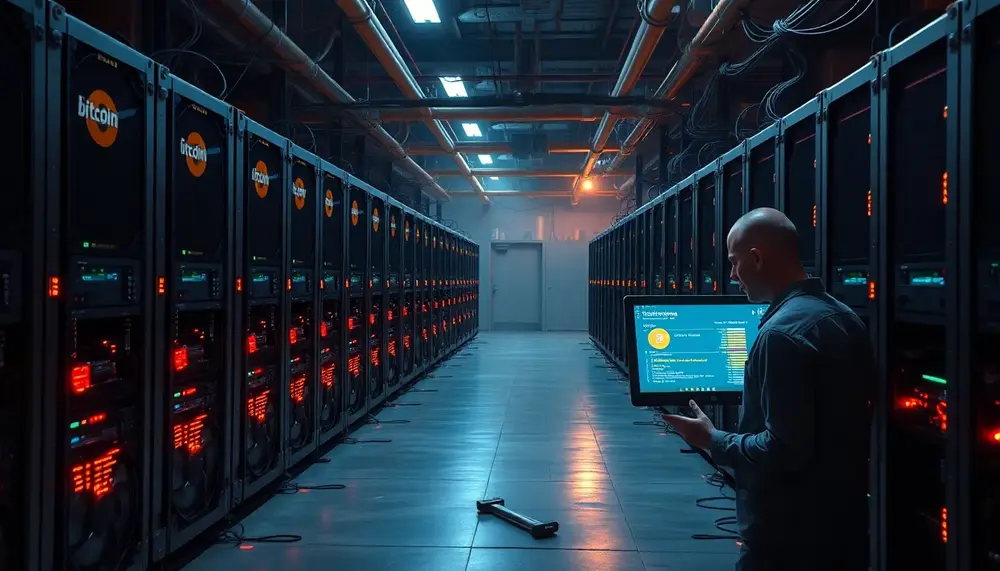
The Bitcoin mining industry is currently experiencing what experts describe as the "most challenging margin environment of all time." Mining companies, including large publicly traded operators, are struggling to reach profitability as revenues plummet and costs soar. The crisis is attributed to a combination of factors, including a significant drop in Bitcoin's price from nearly $126,000 in October to below $80,000 in November, alongside record-high mining difficulty.
"The profitability of mining has reached structural lows that experts say represent more than just a temporary downturn."
As a result, the hash price, which measures how much miners earn per unit of computing power, fell from $55 per petahash per second (PH/s) in Q3 to approximately $35 PH/s by the end of 2024. This marks the lowest level in Bitcoin's history, with recent lows dipping below $35 PH/s on November 21, 2024. Currently, the hash price stands at about $38.3 per day, dangerously close to the breakeven point of $40 per day, prompting miners to consider shutting down operations.
Get $500 free Bitcoin mining for a free testing phase:
- Real daily rewards
- 1 full month of testing
- No strings attached
If you choose to buy after testing, you can keep your mining rewards and receive up to 20% bonus on top.
In summary, the Bitcoin mining sector is grappling with unprecedented challenges, with profitability at an all-time low and many miners facing the prospect of operational shutdowns.
Record Low Mining Profitability
The profitability of Bitcoin mining has plummeted to just $0.0334 per day per terahash of computing power, the lowest level since 2023. This situation places immense pressure on companies of all sizes, as their daily operating costs exceed their daily revenues. Alarmingly, new ASIC mining machines now require over 1,200 days to break even, the longest payback period in Bitcoin's history.
This extended payback period is particularly concerning as the next Bitcoin halving, which will reduce mining rewards, is expected in about 850 days. This means miners may not recoup their equipment costs before facing another significant revenue drop.
In conclusion, the mining industry's profitability crisis is deepening, with miners facing extended payback periods and increasing operational pressures.
Impact of Bitcoin Halving on Mining Economics
The halving of block rewards in April 2024 reduced the rewards from 6.25 Bitcoin to 3.125 Bitcoin, effectively halving miners' primary revenue source. Despite this revenue drop, the total network hash rate continued to grow rapidly, reaching 831 exahashes per second in May 2024, a 60% increase from early 2024 lows. This growth indicates ongoing investments in mining infrastructure despite declining profitability.
Moreover, the energy required to mine a Bitcoin surged to approximately 854,400 kilowatt-hours post-halving, nearly doubling compared to previous levels. This spike in energy demand has driven mining costs to around $112,000 per Bitcoin, approximately 1.3 times the current market value of Bitcoin.
In summary, the halving has drastically altered the economics of Bitcoin mining, leading to increased costs and further financial strain on miners.
Mining Stocks Plummet Amidst Profit Margin Erosion
Since October 2024, the stock prices of publicly traded mining companies have plummeted significantly. MARA Holdings, one of the largest miners, saw a decline of about 50% from its October high, while CleanSpark dropped by 37% and Riot Platforms by 32%. HIVE Digital Technologies experienced the steepest decline, with a 54% drop from its October peak.
These stock declines reflect investor concerns regarding the industry's viability under current conditions. Many mining companies are responding by reducing debt and securing liquidity, with CleanSpark recently repaying its Bitcoin-backed credit line at Coinbase as part of industry-wide debt reduction efforts.
In conclusion, the mining sector's stock prices are in freefall, driven by eroding profit margins and investor anxiety about the industry's future.
Shift Towards AI and High-Performance Computing
In light of the unsustainable economics of Bitcoin mining, many companies are diversifying and investing in artificial intelligence (AI) and high-performance computing. This strategy allows miners to leverage their existing energy infrastructure and facilities for more stable revenue sources. Some companies that have made this pivot have seen positive market responses, although overall sector revenues from AI-driven activities remain low and cannot fully offset the decline in Bitcoin mining profitability.
Additionally, the geographical distribution of mining is shifting towards regions with the cheapest electricity. Only operations with electricity costs below $0.05 per kilowatt-hour and high-efficiency equipment are likely to remain profitable.
In summary, the mining industry is increasingly turning to AI and efficient energy use as a means of survival amidst ongoing economic challenges.
Consolidation in the Mining Industry
The current crisis signals more than just temporary market fluctuations; it indicates a fundamental shift towards consolidation within the industry. Only the most efficient operators with access to the cheapest energy sources are likely to survive. Smaller miners and those with average electricity costs face an insurmountable challenge, as their daily operating costs exceed their daily revenues, leading to a massive exit from the industry.
This consolidation may strengthen the remaining companies but raises concerns about the decentralization of the Bitcoin network, a core principle of cryptocurrency design. The industry, once welcoming participants from around the globe, is increasingly becoming dominated by large industrial players with preferential energy access.
In conclusion, the Bitcoin mining industry is undergoing significant consolidation, which may impact the decentralization that is fundamental to its design.
Sources:
- Die Bitcoin-Mining-Branche steht vor einer der schwersten Krisen ihrer 15-jährigen Geschichte
- Canaan Entwickelt KI-gestützte Grüne Mining-Plattform
- Bitcoin -Mining ist laut einem Putin-Berater zu Russlands „verstecktem Exportgut“ geworden.
- IBIT gehört zu den meistgehandelten ETFs, während Bitcoin (BTC) stark steigt; Mining-Aktien fallen
- Canaan erweitert grünes Bitcoin-Mining mit erneuerbaren Energien, KI und Tokenisierung
- Bitfarms Aktie: Absturz beschleunigt sich!