Table of Contents:
Alephium's BlockFlow Algorithm and Blake3 Proof-of-Work Technology
Alephium is not simply another proof-of-work blockchain with a rebranded consensus mechanism. Its architecture introduces a genuinely novel sharding solution called BlockFlow, which combines DAG-based (Directed Acyclic Graph) sharding with a UTXO model to achieve parallel transaction processing without sacrificing security or decentralization. Understanding this architecture is foundational to making informed decisions as a miner — from hardware selection to pool strategy.
How BlockFlow Sharding Changes the Mining Landscape
Alephium's mainnet currently operates with 16 shards organized into 4 groups, producing a theoretical throughput of over 10,000 transactions per second under load. Each shard generates its own chain of blocks, and miners can target any of the 16 shard chains simultaneously. The BlockFlow algorithm uses a dependency graph to ensure cross-shard transactions remain consistent — a block on shard G1→G2 must reference the latest confirmed blocks from both group 1 and group 2 before it can be mined. This means miners are not simply appending to a single chain but are actively participating in a multi-dimensional ledger structure.
Get $500 free Bitcoin mining for a free testing phase:
- Real daily rewards
- 1 full month of testing
- No strings attached
If you choose to buy after testing, you can keep your mining rewards and receive up to 20% bonus on top.
From a practical mining standpoint, this has a direct implication: your mining software must correctly implement the BlockFlow header construction. If you are diving deep into how the Alephium proof-of-work puzzle is actually constructed, you will find that the block template your pool or node delivers already handles shard dependency resolution — but only if you are running a properly synced full node or connecting to a reliable pool that does so on your behalf.
Blake3: Why This Hash Function Matters for Miners
Alephium uses Blake3 as its proof-of-work hash function — a deliberate choice with significant hardware implications. Blake3 is a modern cryptographic hash function designed for extreme speed on general-purpose CPUs and GPUs, while being relatively less amenable to the type of highly parallelized silicon optimizations that gave SHA-256 ASICs their dominant edge in Bitcoin mining. Blake3 processes data in a binary tree structure using 8 parallel compression chains internally, which maps well onto SIMD instruction sets (AVX-512, for example) available in modern GPUs and CPUs.
In practical terms, this means GPU miners have historically held a competitive position on Alephium — though the landscape is shifting. The emergence of dedicated hardware has begun to change the economics, and anyone serious about long-term mining profitability should understand the current state and trajectory of purpose-built ASIC hardware for ALPH before committing capital to a GPU farm.
Blake3's performance characteristics also make raw hashrate figures particularly meaningful on this network. Unlike algorithms where memory bandwidth creates a ceiling, Blake3 performance scales tightly with compute throughput. This is why properly measuring and interpreting your effective hashrate on Alephium is more straightforward than on memory-hard algorithms like Ethash — what your hardware reports is closely correlated with what the network actually sees.
- Block time: 64 seconds per shard, resulting in a network-wide block every 4 seconds on average across all 16 shards
- Mining algorithm: Blake3 with Alephium-specific header serialization (not a drop-in replacement for other Blake3 coins)
- Epoch adjustment: Difficulty retargets every block using a DAA (Difficulty Adjustment Algorithm) based on a median timestamp window
- Reward structure: Block rewards follow an emission schedule targeting a 1 billion ALPH cap over approximately 82 years
The combination of BlockFlow sharding and Blake3 PoW creates a mining environment that rewards both technical understanding and correct software configuration. Miners who treat Alephium like a simple GPU coin without accounting for its sharded architecture will consistently leave performance and revenue on the table.
Hardware Showdown: ASIC vs. GPU vs. CPU Mining for Alephium
Alephium's Blake3 proof-of-work algorithm fundamentally shapes which hardware makes economic sense. Unlike Ethereum's old Ethash, Blake3 is highly parallelizable and computationally lean, which means the efficiency gap between hardware tiers is more pronounced than in many other PoW ecosystems. Choosing the wrong hardware doesn't just hurt margins — it can mean mining at a net loss within weeks of deployment.
ASICs: The Efficiency Leaders with Real Trade-offs
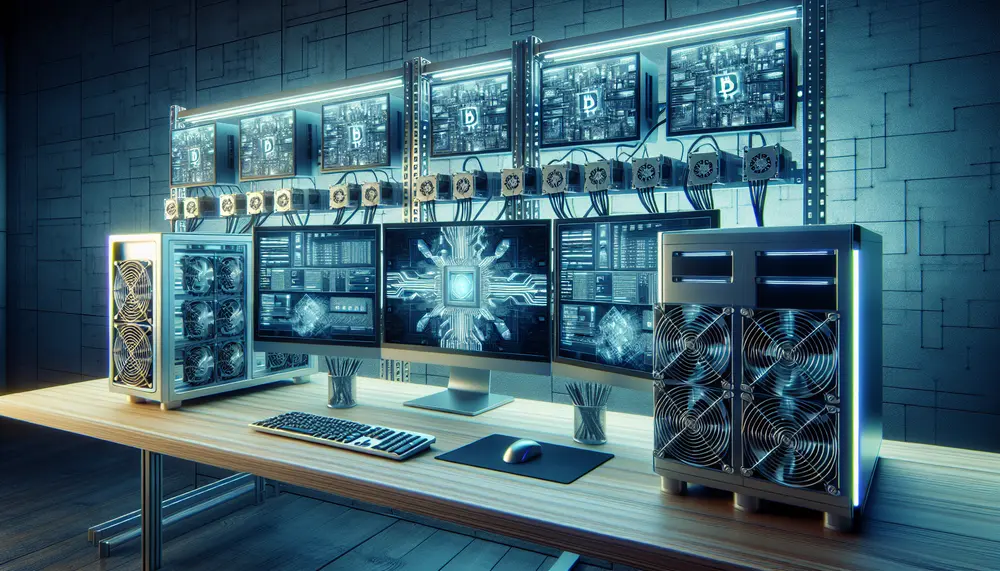
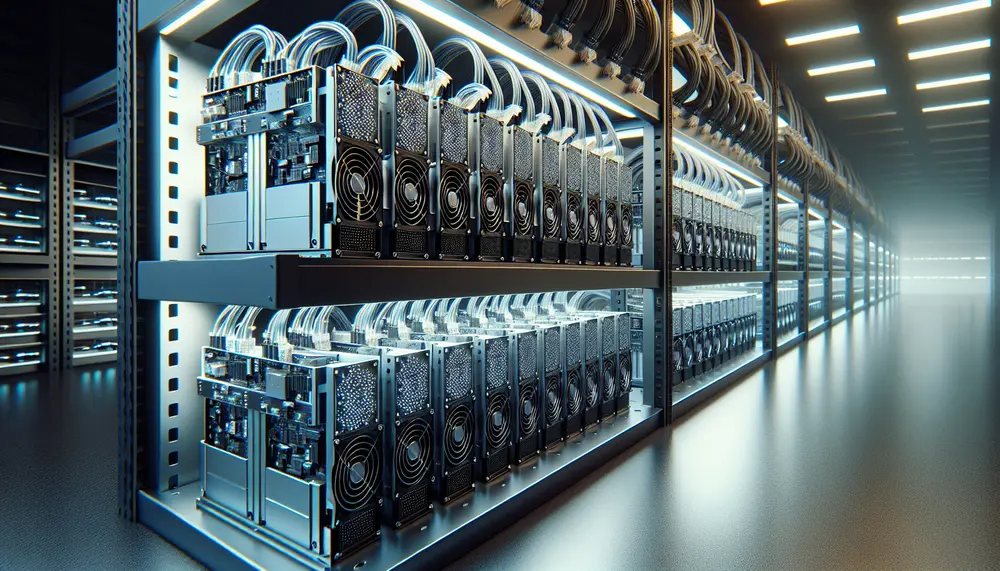
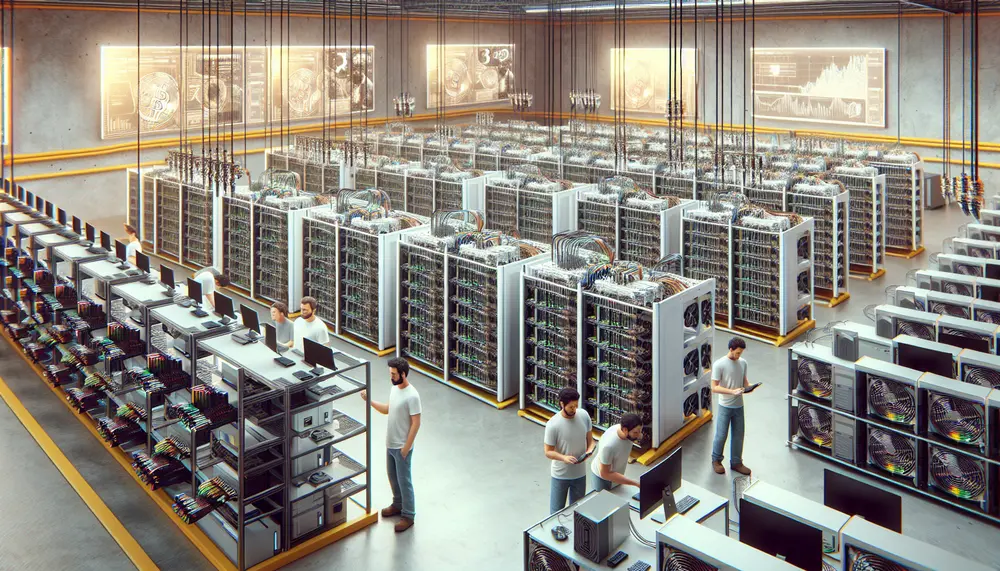
Dedicated ASICs for Alephium — such as the Goldshell AL-BOX or the iPollo G1 — deliver hashrates in the range of 400–1,200 GH/s at 200–600W, producing efficiency figures around 0.5–1.0 J/GH. That's a completely different league compared to consumer GPU setups. For anyone serious about maximizing revenue-per-watt at scale, a dedicated deep-dive into running ASIC hardware for Alephium is worth reading before committing capital. The critical downside: ASICs are single-purpose machines. If Alephium's network difficulty spikes or the block reward schedule tightens, you cannot repurpose the hardware — depreciation becomes the dominant risk factor.
ASICs also concentrate hash power, which has network-level implications for Alephium's decentralization goals. Some miners deliberately avoid them for that reason, especially smaller operators who want to hedge across multiple coins.
GPUs: Flexibility at the Cost of Raw Efficiency
Mid-range to high-end GPUs remain the most flexible entry point. An RTX 3080 achieves roughly 1.8–2.2 GH/s on Alephium mining software, while a RX 6800 XT hits similar numbers with lower power draw under optimized settings. For anyone building or expanding a GPU rig, understanding the fundamentals of GPU-based Alephium mining is the logical starting point. AMD cards in particular deserve attention: with proper driver tuning and memory timings, they often outperform their power consumption suggests, and there's detailed guidance on squeezing maximum efficiency out of AMD hardware for Alephium that can close a significant portion of the gap to Nvidia equivalents.
The practical advantage of GPUs is resale value and algorithm flexibility. A 6-GPU rig can be redeployed to mine Kaspa, Flux, or other Blake/Equihash variants if profitability shifts — a hedge that ASICs simply cannot offer.
CPU Mining: Niche but Not Irrelevant
CPU mining on Alephium produces measurable — if modest — results. A high-core-count CPU like the AMD Ryzen 9 7950X can reach 5–15 MH/s on Alephium, which translates to negligible revenue at current network difficulty but near-zero additional infrastructure cost if the machine is already running 24/7. For those curious about the practical setup and whether it makes any financial sense in their specific situation, getting started with CPU mining on Alephium walks through the real numbers honestly. CPU mining is best framed as experimentation or as a way to support network decentralization at minimal cost — not as a profit strategy.
The bottom line across all three categories: electricity cost is the single largest variable. At $0.05/kWh, even a modest GPU farm runs profitably. At $0.15/kWh, only well-optimized ASIC setups survive the math. Know your power cost before you order any hardware.
Building and Configuring a High-Performance Alephium Mining Rig
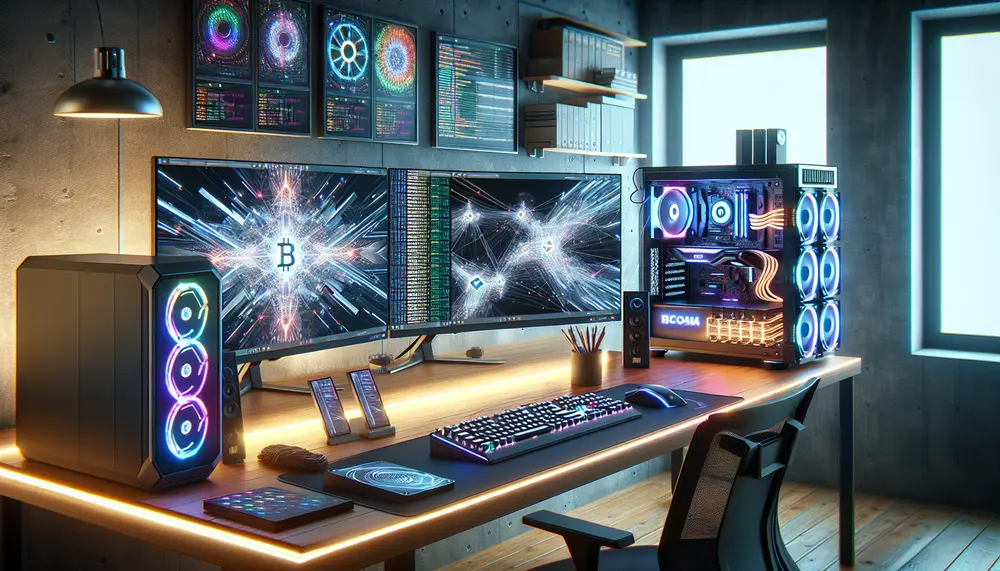
Alephium's Blake3 hashing algorithm fundamentally changes what hardware you need compared to Ethereum-era GPU mining. Blake3 is highly memory-bandwidth-sensitive, which means raw shader performance matters less than memory speed and efficiency. This shifts the competitive landscape toward GPUs with fast GDDR6X memory and high memory bandwidth — the NVIDIA RTX 3080 and 3090 consistently outperform cards with more compute units but slower memory buses. Before you spend a dollar on hardware, understanding this distinction will save you thousands.
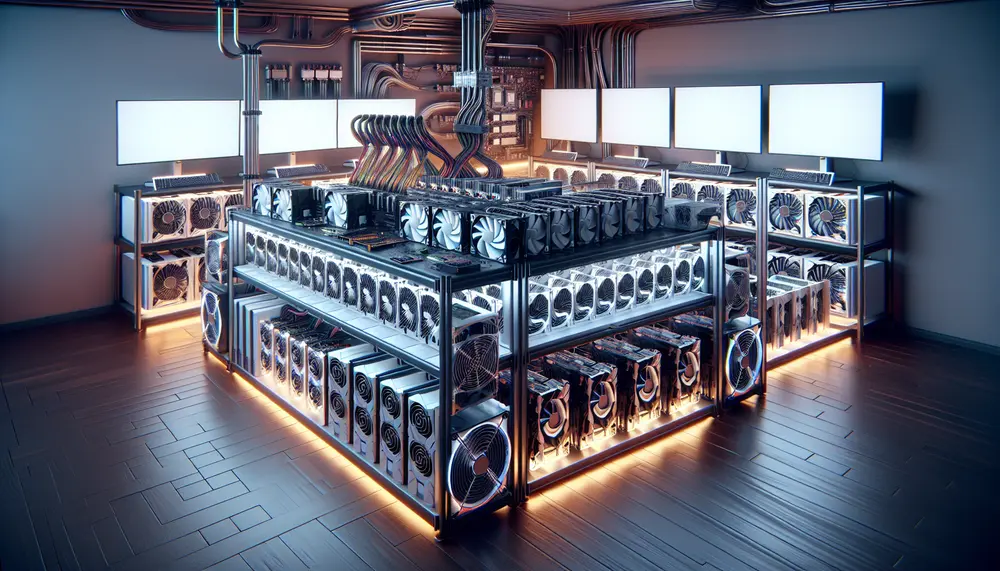
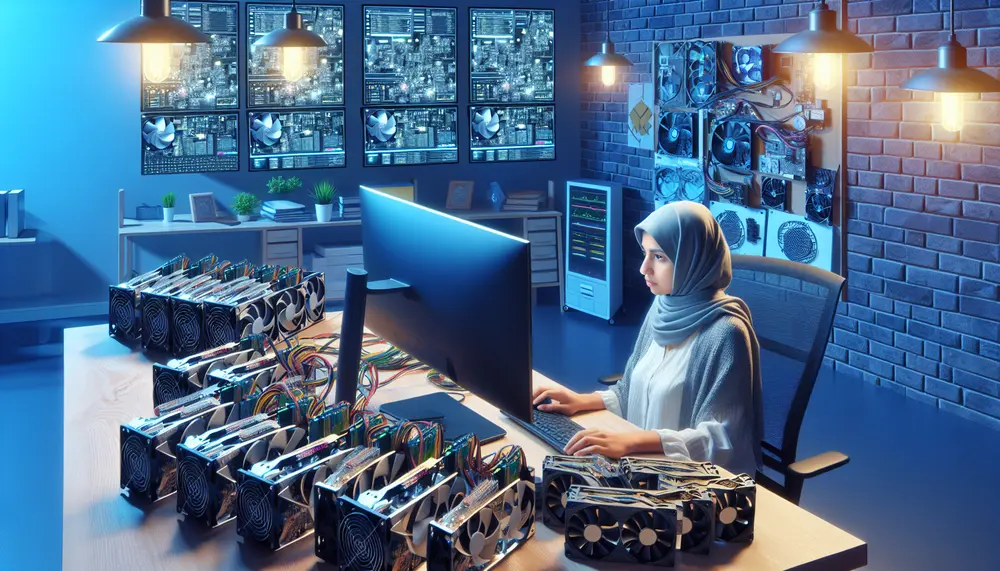
For a detailed breakdown of component selection, from motherboard compatibility to PSU headroom calculations, the step-by-step hardware assembly process covers every component decision with real-world benchmarks. The short version: build around 6-8 GPUs per rig, use a server-grade motherboard with sufficient PCIe lanes (ASRock H110 Pro BTC+ or similar), and never run your PSU above 80% load. A 6x RTX 3080 rig pulling roughly 1,400W under optimized settings needs a 1,800W PSU minimum — ideally two 1,200W units in a dual-PSU configuration for redundancy and easier load balancing.
Frame, Cooling, and Electrical Infrastructure
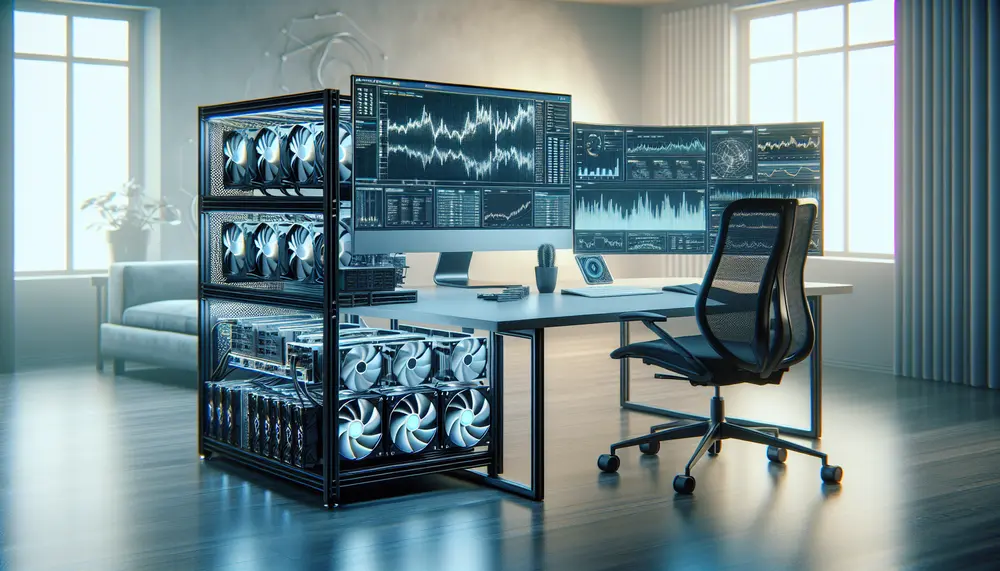
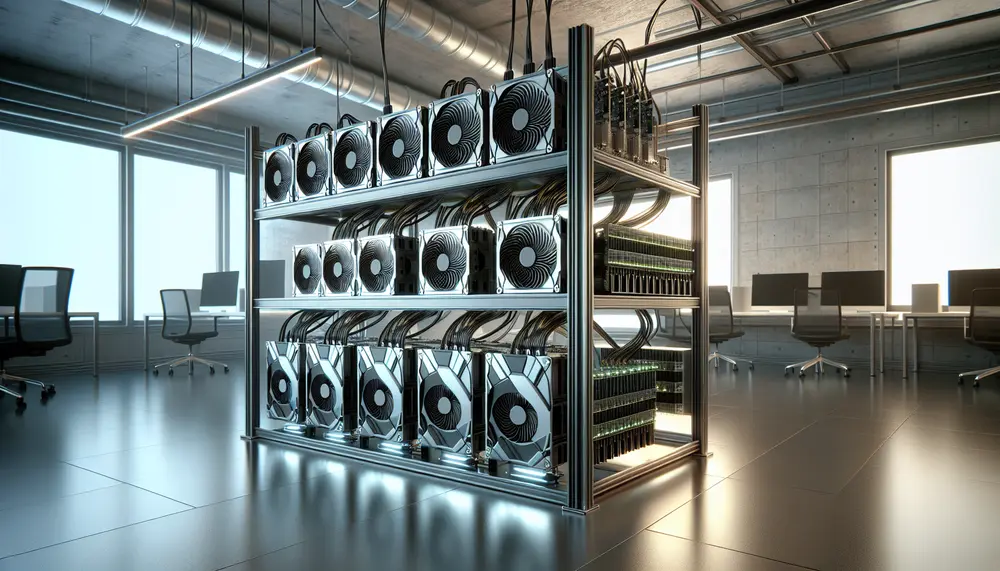
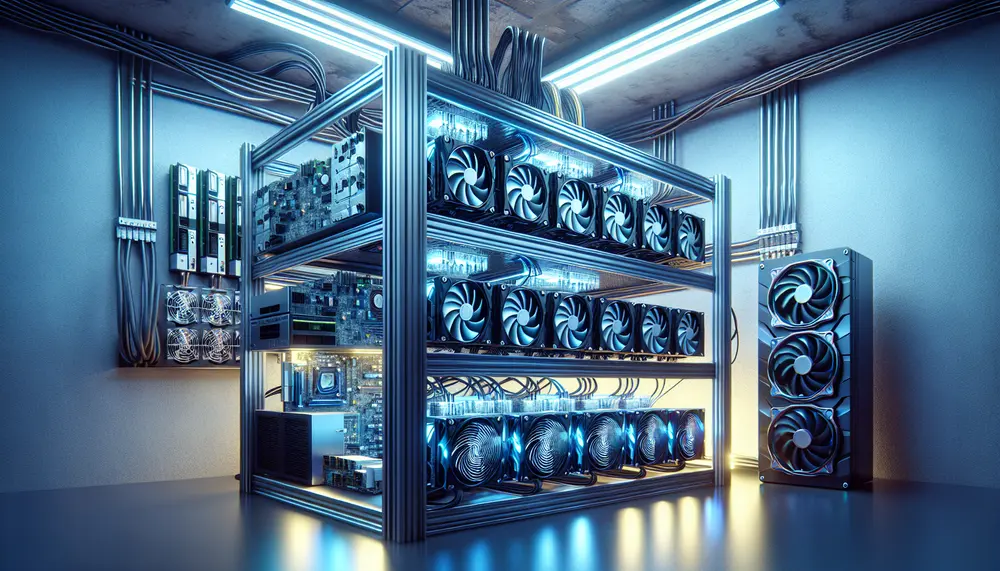
Open-air aluminum frames outperform closed cases every time in multi-GPU deployments. Aim for at least 50mm of airflow clearance between GPUs and position cards in a push-pull airflow configuration. Ambient temperature directly impacts your hash rates — every 10°C increase above 25°C ambient typically reduces effective hashrate by 3-5% due to thermal throttling. Industrial rack fans mounted at the rig's exhaust end pulling air across the cards keep junction temperatures below 90°C even during summer peaks.
On the electrical side, dedicated 20A or 30A circuits per rig are non-negotiable. Running multiple rigs on shared household circuits creates fire risks and causes voltage sag that destabilizes your mining software. Have a licensed electrician install proper breakers, and use PDUs with individual outlet monitoring so you can track per-GPU power draw without guessing.
Software Configuration and Driver Optimization
Once the hardware is running, software configuration determines whether you're leaving 15-20% of your potential hashrate on the table. The core configuration parameters that matter most are worker threads, GPU polling intervals, and pool connection settings. Use T-Rex Miner or lolMiner for Alephium — both have native Blake3 support with active optimization updates. Set your intensity parameter between 18-21 depending on VRAM size; higher values increase hashrate but can cause DAG rebuild instability.
Memory overclocking delivers the biggest performance gains for Blake3 mining. A stock RTX 3080 achieves roughly 2.8-3.0 GH/s on Alephium, but with proper memory overclocking that number climbs to 3.4-3.6 GH/s — a 20% improvement for zero hardware cost. The optimal clock configurations per GPU model are worth studying carefully, particularly the relationship between memory junction temperature and clock stability. Push memory clocks in 50 MHz increments, run a 30-minute stability test after each step, and watch for rejected shares as the primary rejection signal.
Core clock undervolting is equally important. Reducing core voltage by 100-150mV while dropping core clocks to 1,100-1,200 MHz on the RTX 3080 cuts power consumption by 80-100W per card with less than 2% hashrate loss. At $0.08/kWh, that translates to roughly $5-6 per card per month in electricity savings — significant when multiplied across six or eight GPUs. If you're newer to this optimization process, a foundational walkthrough of the entire setup workflow provides the baseline understanding needed before diving into advanced tuning.
Alephium Mining Difficulty: Mechanics, Adjustments and Long-Term Trends
Alephium's difficulty adjustment mechanism is one of the more sophisticated implementations in the UTXO-based blockchain space. Unlike Bitcoin's two-week adjustment window, Alephium recalculates mining difficulty approximately every 64 blocks — roughly every 16 minutes under normal conditions. This near-real-time responsiveness means the network reacts to sudden hashrate changes far more aggressively, preventing the prolonged block time distortions that plague slower-adjusting chains. For miners, this has direct operational consequences: profitability windows open and close faster, and capitalizing on hashrate drops from competing miners requires almost immediate action.
The underlying algorithm targets a block time of 64 seconds across all 16 shards simultaneously. Each shard maintains its own independent difficulty, which means the network's aggregate difficulty is actually the sum of 16 parallel difficulty targets. When you see network difficulty figures in explorers or mining software, confirm whether the value represents per-shard difficulty or aggregate difficulty — the difference is a factor of 16 and a common source of miscalculation when comparing hardware performance. For a deeper technical breakdown of how these numbers behave over time, the analysis on how Alephium's difficulty algorithm actually works covers the DAA specifics in granular detail.
What Drives Difficulty Spikes and Drops
The most significant difficulty events in Alephium's history have correlated directly with two triggers: new ASIC hardware releases and speculative price rallies. When Goldshell released early ALPH-compatible miners in 2023, network difficulty increased by over 400% within weeks as dedicated hardware replaced GPU rigs. GPU miners who hadn't modeled this scenario into their break-even calculations were caught holding equipment that suddenly produced a fraction of previous yields. The relationship between network hashrate and difficulty is essentially one-to-one — understanding how total network hashrate composition shifts gives you an early warning system for incoming difficulty pressure before the numbers officially adjust.
Conversely, difficulty drops typically occur when ALPH's price falls sharply below mining cost thresholds for marginal operators. When profitability collapses, weaker miners exit, hashrate drops, and difficulty follows downward within hours rather than days. This creates short-term opportunities for miners with lower electricity costs who can sustain operations through the downturn and capture elevated per-block rewards until difficulty re-stabilizes.
Long-Term Difficulty Trajectory and What to Model For
Projecting long-term difficulty requires accounting for Alephium's halving schedule — block rewards decrease over time, which periodically triggers miner attrition and temporary difficulty relief. However, if price appreciation offsets the reward reduction, net hashrate can actually increase post-halving as speculative miners enter. Historical data from similar chains suggests modeling a 15–25% annual difficulty increase as a conservative baseline for hardware ROI calculations, assuming no black-swan hardware releases.
- Short-term monitoring: Track difficulty changes every 64-block epoch using on-chain data or explorer APIs — automated alerts for movements exceeding 5% in a single adjustment window are operationally valuable
- Hardware lifecycle planning: Assume any miner purchased today faces 18–24 months before difficulty growth erodes profitability to break-even, absent price increases
- Geographic arbitrage: Miners with sub-$0.04/kWh electricity remain profitable through difficulty environments that force out 80% of competitors
Whether Alephium mining remains economically viable through these difficulty cycles depends heavily on your cost basis and hardware efficiency. The broader profitability calculus for ALPH mining explores how different operator profiles fare under varying difficulty scenarios — essential reading before committing significant capital to hardware acquisition.
Solo Mining vs. Pool Mining: Strategic Decision-Making for Alephium Miners
The choice between solo and pool mining isn't philosophical — it's purely mathematical. Your decision should hinge on one core variable: your hashrate relative to the network. Alephium's current network hashrate fluctuates around 200–350 TH/s depending on market conditions. If your operation contributes less than 0.5% of that total, solo mining transforms from a strategy into a lottery ticket.
The Case for Solo Mining: When It Actually Makes Sense
Solo mining on Alephium delivers the full block reward — currently 3 ALPH per block across the network's 16 shards — directly to your wallet with zero pool fees. That fee elimination (typically 1–2%) sounds attractive, but the variance is brutal. A miner running 10 GH/s solo might wait weeks or months between valid block finds. If you're considering going independent, the technical and financial prerequisites for mining Alephium without a pool go far deeper than most guides cover — including UTXO management and node synchronization requirements that can make or break your operation.
The realistic threshold for solo mining to become statistically viable on Alephium sits at roughly 1–2 TH/s sustained hashrate. Below that, the expected time between blocks exceeds any reasonable cash flow planning horizon. Operations running GPU farms of 50+ high-end cards (RTX 4090s or RX 7900 XTX units) start approaching this territory, but even then, variance can mean 3x your expected interval between rewards.
Pool Mining: Smoothing Returns Across the Network
For the vast majority of Alephium miners, pool participation is the operationally sound choice. Pools aggregate hashrate from hundreds or thousands of participants, delivering proportional payouts on a predictable schedule — typically every few hours. The psychological and cash-flow benefits alone justify the 1–2% fee for anyone not running an industrial-scale operation.
Not all pools are created equal, however. When evaluating where to direct your hashrate, the critical metrics to assess are:
- Pool hashrate share: Avoid pools controlling more than 40% of network hashrate to preserve decentralization and your own risk exposure to pool downtime
- Payout scheme: PPLNS (Pay Per Last N Shares) rewards loyalty and penalizes pool-hopping; PPS (Pay Per Share) offers more predictable income but typically at higher fees
- Minimum payout thresholds: Some pools set minimums at 1 ALPH, others at 10 ALPH — this affects your liquidity and reinvestment cycle
- Geographic server distribution: Latency above 100ms meaningfully increases your stale share rate, directly cutting effective hashrate
Identifying which pools consistently deliver competitive net returns requires looking beyond marketing claims. A detailed breakdown of the leading Alephium pool options and their actual fee structures reveals significant differences in real-world profitability. For a direct profitability comparison across pool operators, an analysis focused specifically on maximizing your ALPH earnings per TH/s should be your reference point before committing hashrate.
One aspect miners consistently underestimate is the interpretive work behind pool dashboards. Luck percentage, PPLNS window depth, and orphan block rates all tell a more complete story than raw hashrate numbers. Learning to read pool statistics correctly to optimize your payout strategy can meaningfully improve your effective yield without changing a single hardware configuration. A pool showing 120% luck over 7 days sounds great — but sustained values above 100% often indicate aggressive luck-based payout calculations that revert to the mean, cutting your future earnings.
Profitability Analysis: Calculating Real Returns from Alephium Mining
Mining profitability is never a static number — it's a moving target shaped by four interdependent variables: ALPH spot price, network hashrate, your hardware's efficiency, and local electricity cost. Experienced miners treat profitability as a probability distribution, not a point estimate. Before committing capital, you need a model that holds up under adverse conditions, not just today's numbers.
Building a Realistic Cost Model
Start with your true all-in power cost. A Bitmain Antminer AL1 drawing 3,500W at $0.07/kWh generates $0.252/hour in electricity costs alone — that's roughly $6.05/day before any cooling or infrastructure overhead. At $0.12/kWh, the same machine costs $10.08/day in power, which fundamentally changes the break-even equation. Add 15–20% on top of your miner's rated wattage to account for PSU inefficiency, cooling fans, and networking equipment — this is where many first-time miners underestimate their actual draw.
Hardware amortization is the cost most miners ignore until it's too late. A miner priced at $2,800 needs to generate that much in gross profit before it contributes a single dollar to your actual returns. Assuming a conservative 18-month effective mining window before the next hardware generation makes it obsolete, that's approximately $5.19/day in amortization cost that must be factored in. At thin margins, this is the variable that turns a "profitable" setup into a loss. Whether the numbers actually work in your favor depends heavily on when you entered the market and at what hardware price.
On the revenue side, your daily ALPH earnings follow this formula: (Miner Hashrate / Network Hashrate) × Daily Block Reward. With Alephium's current emission schedule producing roughly 32,400 ALPH per day across all 16 shards and the network sitting around 350 PH/s, a 10 TH/s miner captures approximately 0.00286% of daily emissions — roughly 0.93 ALPH/day. At $1.80/ALPH that's $1.67 in gross revenue against potentially $7–10 in total daily costs. This is why fleet scale, cheap power, and strategic coin holding matter so much.
Dynamic Factors That Shift Your Break-Even
Network difficulty compounds the challenge. As more miners join or as existing miners upgrade hardware, your relative share of block rewards shrinks without any change on your end. How difficulty adjustments work mechanically directly determines how quickly a profitable setup can become marginal — and this can happen over days, not months, during bull market hashrate influxes.
ALPH price volatility creates the biggest lever in either direction. A 2× price increase turns a borderline operation into a strong performer overnight, while a 40% drawdown can push even efficient miners underwater. Sophisticated operators model three scenarios — bear ($0.60 ALPH), base ($1.80), and bull ($4.50) — and only proceed if the bear case still covers operating expenses without amortization. Several operational techniques can shift your effective yield beyond raw hashrate, including pool fee optimization, timing coin sales, and managing power costs through off-peak tariffs.
- Pool fees: Range from 0.5% to 2%; over a year, a 1.5% difference on $50K gross revenue is $750 real money
- Hosting vs. home mining: Colocation at $0.05/kWh can outperform home mining at $0.10/kWh even after hosting markup
- Tax treatment: Mining income taxed as ordinary income at receipt in most jurisdictions — this can represent 20–37% of gross revenue depending on your bracket
- Coin accumulation strategy: HODLing mined ALPH introduces speculative exposure; selling immediately locks in operating cash flow
The miners generating consistent returns in this space run detailed spreadsheets updated weekly, not monthly. They know their exact cost-per-ALPH mined at current difficulty and have pre-set thresholds for pausing operations if spot price drops below their marginal cost of production. That discipline separates professional operators from hobbyists who only discover losses at tax time.
FAQ about Alephium Mining in 2026
What is Alephium Mining?
Alephium Mining involves the process of validating transactions and securing the network by solving complex mathematical problems using hardware optimized for the Blake3 proof-of-work algorithm.
How does the BlockFlow sharding algorithm impact mining?
BlockFlow allows miners to contribute hashpower across multiple shards, improving transaction throughput and reducing mining difficulty through its dynamic energy adjustment mechanism.
What hardware is best for Alephium mining?
Mid to high-end GPUs, especially those with GDDR6X memory like the RTX 3080 and RX 6800 XT, currently offer the best performance for Alephium mining, while ASIC miners provide higher efficiency but are less versatile.
What are the profitability factors for Alephium mining?
Profitability is influenced by several factors, including ALPH token price, network hashrate, hardware efficiency, and electricity costs, making careful financial planning crucial for miners.
Is it better to mine Alephium solo or in a pool?
For most miners with lower hashrate, joining a mining pool offers more predictable returns and reduced variance compared to solo mining, which may only be viable for those with very high hashrate capabilities.